Halo 2 Decompilation
Halo 2
OrigenXbox
TecnologíaDescompilación y Reconstrucción en C/C++
Disponible paraWindows, Linux, macOS
Ver proyecto oficialSobre el proyecto
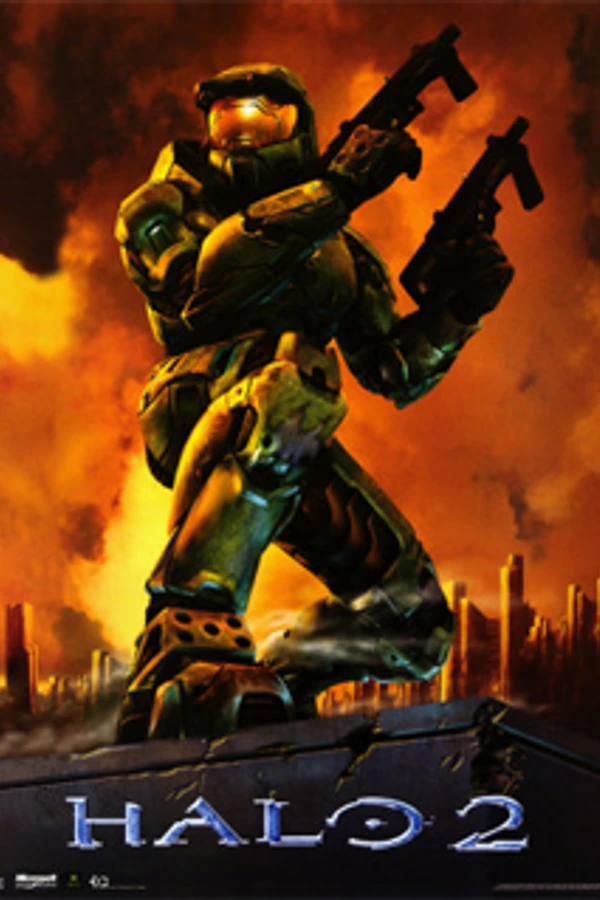
Halo 2 es un videojuego de disparos en primera persona desarrollado por Bungie Studios y lanzado para la consola Xbox en 2004. Es la segunda entrega en la franquicia de Halo y su trama continúa los sucesos relatados en Halo: Combat Evolved.
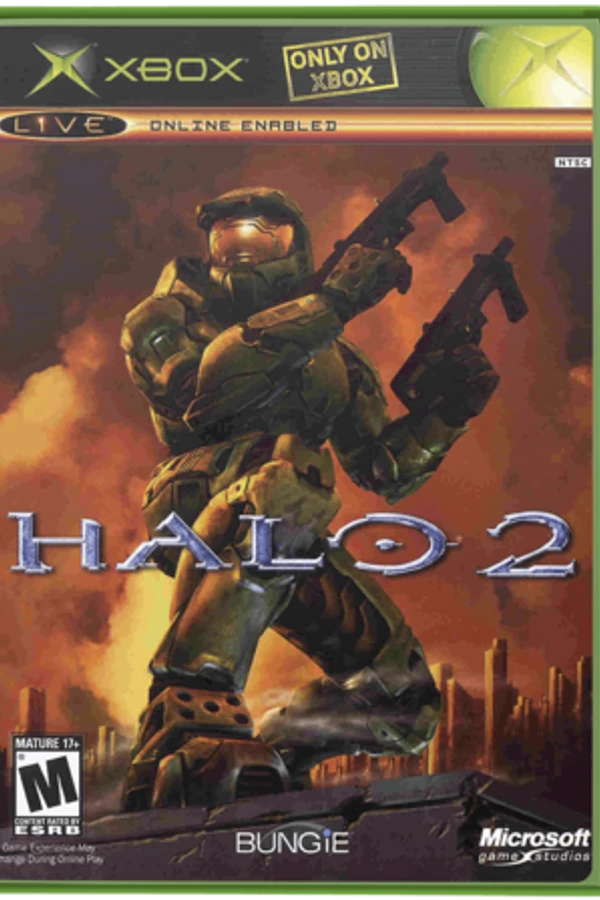
2 versiones de Halo 2
Estás viendo: Halo 2 Decompilation
Información oficial del proyecto
Halo 2 Decompilation (work in progress)
Halo 2 Decompilation is an independent preservation and reverse-engineering project. It studies the retail executable of Halo 2 for the original Xbox and recreates its program logic in human-readable C and C++ through independent analysis. Each recreated function is checked against the retail executable: built with the period-correct compiler, it must produce exactly the same bytes. That check is what makes the recreated code verifiable. A longer-term research goal is to study how the game's code could run on other platforms, using game data that each user supplies from their own copy.
Alongside the game's own code, the project also decompiles Havok, the physics library linked into the game, because Halo 2's vehicles, ragdolls and projectiles have to behave exactly as they do on the Xbox. The executable's other libraries (the Xbox SDK's, Bink video and so on) are not decompiled; a port would replace them.
The project is non-commercial and is not affiliated with or endorsed by Microsoft, Bungie or 343 Industries. Read LEGAL.md for the project's scope, what it does not contain, and its rules for contributions, and PROVENANCE.md for where its information comes from.
This is a community-driven decompilation. It is built in the open by many people: contributors who claim a range and send pull requests, and maintainers who review, merge and keep the build honest. Many of the people working on it, the maintainer included, work alongside AI coding agents such as Claude and Codex, and every change still has to pass the same byte-for-byte check and review. Everyone who has helped is credited in The community.
Contributors are welcome. No prior decompilation experience is needed, only patience and some C. New here? Start with docs/START_HERE.md: the setup checklist, how to claim a range, and a prompt you can paste into an AI coding agent. Then see How to help and CONTRIBUTING.md.
What this repository does not contain
- No Halo 2 game assets: no maps, textures, models, audio or cinematics.
- No game executable (XBE) and no disc image.
- No Microsoft Xbox SDK/XDK: no compiler, libraries or headers.
- No Havok SDK material: no headers, documentation, samples or source. The Havok code here is recreated from the retail executable and named by what it does.
- No original or leaked Halo 2 source code.
- No leaked symbols, PDBs or linker maps. Names that came from such sources through a third-party dataset have been removed from the inventory, and names in the source that matched such sources have been renamed; see PROVENANCE.md.
- No confidential or internal Microsoft, Bungie or 343 Industries material.
Requirements
To build or check anything, you must supply any original game files you need from a copy of Halo 2 that you are legally entitled to use. The project does not provide game files.
The project does not distribute the Microsoft Xbox SDK/XDK or any proprietary Microsoft development tools. Contributors are responsible for ensuring that any development tools they use are obtained and used lawfully. The maintainers cannot provide, link to, or assist with obtaining proprietary SDK/XDK materials. Byte-for-byte checking currently depends on the original compiler, and no open-source toolchain can reproduce its output yet. Analysis, documentation and review do not need it.
Status
Decompilation is under way, and 10466 retail functions now match byte for byte. The checker reports:
matched 10466 of 11326 game functions (1933984 of 2786206 bytes, 69.41%)
matched 1267 of 1436 Havok functions (174339 of 290362 bytes, 60.04%)
matched 11762 of 17654 functions in scope (2111756 of 3904218 bytes, 54.09%)
Matched code so far includes:
- the script engine's built-in functions;
- AI, actor behaviours and actor slot handlers;
- object damage, shields and vitality;
- network sessions, message codecs and the bitstream;
- UI screens and widgets, and the game engines;
- sound sources, looping sounds and Bink movie playback;
- the game's data arrays, object lists and hash tables;
- geometry, quaternion and matrix maths;
- input, file paths, localized strings, random numbers and game state;
- most of the Havok physics library's functions, from collision agents and constraints to ragdolls and file streams.
Every function is checked automatically on every build, so a match stays a match. Refer to docs/PROGRESS.md, which is updated as work lands.
The target
The retail disc build of Halo 2, as found on the retail disc:
default.xbe SHA-256 | 03215919bb7163259257d361f4c7bf802a7ab12aa85e2689436369b5c427935d |
| Internal name | halo2ship.exe |
| Linked | 2004-09-28 |
| Xbox SDK | XDK 5849 (libraries 1.0.5849) |
| Compiler | Visual C++ 7.1 from XDK 5849 (cl 13.10.3077), /GL /Gr with /O2 or /O1 per file, linked with /LTCG |
The approach
The aim is a matching decompilation: C source that the original compiler turns back into the same bytes as the retail XBE. Matching gives every function an automatic pass or fail, and that check is what made the Halo CE decompilation dependable.
Halo 2's retail build is harder than Halo CE's. It was compiled with
link-time code generation (LTCG): the compiler generates code for the
whole program at once, when it is linked. So functions are inlined across
source files, and internal functions get custom calling conventions. 42.5%
of the functions called in the retail XBE take arguments in eax, ebx,
esi or edi, which MSVC's standard conventions never do. Under LTCG, a
function's bytes depend on its callers and callees, not only on its own
source. We know of no earlier project that has matched such a build.
So the work runs in stages:
- Feasibility spike (done). Rebuild retail functions with the XDK 5849
compiler in LTCG mode, and find out whether their bytes can be matched.
They can: custom calling conventions, deleted arguments and inlining
decisions all reproduce. The test sources are in
spike/. - Project set-up (done). The function inventory, the build with each source file's flags, the checker and the ready queue.
- Decompilation (in progress), from the leaf functions up. What has worked best on this build, such as fixing a callee's calling convention so its callers match, and the pitfalls (aligned locals, link order), is collected in docs/DECOMPILING.md.
- Readability (in progress, alongside 3). Once a group of functions matches, it gets names from what the code does, structs for the data it reads, and a source file named after its subsystem, without changing a byte of the build.
- Havok (in progress, alongside 3). The physics library is decompiled the same way. It was a prebuilt library compiled without LTCG, so it matches with plain per-file flags; see docs/DECOMPILING.md.
- Native port. The game and Havok code from stages 3 and 5, with the Xbox SDK, Bink and the other libraries replaced.
Build and check
-
Install the Python dependencies:
pip install -r requirements-dev.txt. -
Point the tools at your local files. The retail XBE from your own copy goes at
orig/default.xbe(or setRETAIL_XBE), and the development toolchain'sxboxfolder atsdk/xbox(or setXDK_DIR); see Requirements. Both folders are git-ignored and must never be committed. In Git Bash, also runexport MSYS_NO_PATHCONV=1, which stops Git Bash rewriting the/-style arguments (such as/O2) that the compiler takes. To read the XBE out of a disc image of your own copy:python tools/xiso_extract.py "Halo 2.iso" orig default.xbe -
The inventory,
config/functions.csv, is already committed, so you don't need to regenerate it. Itsnamecolumn holds only library functions' names, from their signatures in the SDK libraries; itsobjectcolumn is empty. See PROVENANCE.md. -
Run
python tools/check.py. It builds the whole game as one LTCG image, compares every decompiled function with the retail bytes, and writes each function's status (matched,nearortodo) back toconfig/functions.csv. It exits 1 while any function differs. -
Pick work with
python tools/ready.py, following docs/DECOMPILING.md.--claimstakes a saved copy of the Active claims table so the list skips ranges someone already has.
| Tool | Use |
|---|---|
tools/xiso_extract.py | Lists or extracts the files of an Xbox disc image. |
tools/xbe.py | Summarises an XBE: sections, linked libraries, certificate. |
tools/ltcg_probe.py | Counts the functions that take arguments in registers (the LTCG evidence above). Needs capstone. |
tools/inventory.py | Finds every function in the XBE and writes config/functions.csv, naming library functions by their signatures. |
tools/functions.py | Function discovery that the inventory uses. |
tools/libsig.py | Recognises library code by byte signature from the SDK's .lib files. |
tools/build.py | Builds the whole game as one LTCG image, with each source file's flags. |
tools/check.py | Compares our functions with retail and records progress. Needs the SDK and capstone. |
tools/ready.py | Lists the functions that are ready to decompile next. --claims drops addresses from a saved copy of the Active claims table; --owner third:havok lists Havok functions instead of the game's. |
tools/open_work.py | Lists work a contributor can claim (source files with functions left, and functions ready to write) outside every person's claim, with the claim line to use. Takes a saved copy of issue #9. |
tools/permute.py | Searches variants of a source function for ones that turn a near-miss into a match. |
tools/near.py | Counts the near-misses in the csv by source file (functions, bytes). No XBE. --list prints each function. |
tools/masked.py | Lists what check.py cannot see because it masks address fields: float constants one step away from the source's literals, strings, and script function definitions that differ from retail. Needs the retail XBE and capstone. |
tools/disasm.py | Disassembles retail code. |
tools/match.py | The spike's one-file matcher, kept for reference. Replaced by check.py. |
How to help
Halo 2 has about 11,300 game functions, so there is room for many people. docs/START_HERE.md walks through these steps and has a ready-made prompt for AI coding agents.
- Get set up as in Build and check, with your own lawfully owned copy of Halo 2 (see Requirements).
- Pick a source file or an address range that no other person holds (the
pinned Active claims
issue lists claims; the maintainers' automated lanes make way for
contributors), and open a draft pull request saying what you are taking.
python tools/open_work.pylists what is open. - Decompile, run
python tools/check.py, and push as functions match. docs/DECOMPILING.md explains the conventions and the compiler's quirks.
Havok functions are open too, and a gentler start than the game's: no
whole-program optimisation, so they match with plain per-file flags.
python tools/ready.py --owner third:havok lists the ready ones; claim a
range the same way.
Not ready to write code? Analysis helps too: several contributors have
mapped a function or a subsystem in a docs/ note that the next person then
decompiled.
Details are in CONTRIBUTING.md, including the contribution provenance policy. Questions are welcome as issues.
The community
Thank you to everyone who has contributed to this project so far:
- @Banshee64, the first contributor: input, team allegiances, Bink playback, looping sounds, damage, projectiles, unit actions, vehicles, path search, cloth, recorded animations and devices, and then the match-tuning of all of it.
- @coldspear: matches across the game, among
them object damage and its owner, online tasks and the upload connection,
and big score cuts in dozens of near misses; much of the tooling (the
permuter's mutations,
masked.py, the near-miss report, claim-awareready.py, the ByteMatch report (then decomp.dev) and the hardening of the disc and XBE readers); and analysis documents for the object core, weapons, surface lighting, Havok, the Xbox Live logon and more. - @BirchWoodGod: matched ranges all over the game, from units and bipeds to network voice, team balancing, map paths, animation channels and lights, analysis of the network channel and session search code, and the published analysis credited below.
- @BrassMonkey71: matched functions in the unit and biped code, AI and elsewhere.
- @mjshfrvstj-sys: the CI that runs the Python tests on every pull request, and disc-image tests.
- @mrv777: an analysis of the capture the flag and assault objects.
- @RWayne93: online messages, a documented near miss, and the match of 0x119280, the creature death timer.
- @andrewnakas: the inventory fixes that took WMADEC's data tables and the DSOUND, XNET and D3D section tails out of the function list, and dozens of fixes checked against retail in the render state, sound, AI and camera code, including disabled drafts brought to compile and behave as retail.
- @Roasted-Codes: the first contributor matches in Havok, the physics library: its collision-pair dispatch and collision agents, constraint serialization, motion steps, and the library's file streams and string helpers.
- @ccgman123: a careful diagnosis of seven near misses, the cleanup that removed an in-body pragma from 0x9d1c0, the match of 0x1f3230, and the tools that keep disabled drafts out of the ready and open-work lists.
- @marioag0412: matches across the game, starting with 0x1e3480 (an object's actor index) and taking in the global preferences, network voice, online tasks and AI code, big score cuts in render and tag-function code, and notes on what still differs in a dozen near misses.
- @averycpawelek: matches in the unit code and nearby (0xc7100, 0xe5840, 0xe2d80 and more) and near misses brought closer, then much of Havok: its constraint helpers, ragdoll and hinge descriptions, service lifecycle and stream helpers, and shared physics helpers.
@kirklandsig maintains the project: runs the build, reviews and merges every pull request, and keeps the Active claims table. Much of the maintainer's own decompilation runs in automated lanes driven by Claude (Anthropic) and Codex (OpenAI): AI coding agents that write and tune the source under the same checks and provenance rules as everyone else, with each batch reviewed before it lands. Many contributors use the same tools. The techniques in docs/DECOMPILING.md were worked out by all of them, people and agents alike, and the commit history credits each change to its author.
Want to be on this list? See How to help.
Credits
- halo-symbol-atlas
(CC BY 4.0): the
nameandobjectcolumns ofconfig/functions.csvonce came from this dataset. Because its names for this build derive from linker maps of unreleased builds, that data has been removed. See PROVENANCE.md. - punpckhdq/halo, bnunu/halo-1 and halo-ce-universal: the Halo CE decompilation and port that this project follows. punpckhdq/halo is AGPL-3.0 since 2026-10-17 (CC0 before); its AGPL revisions are read for understanding only, never copied from (see PROVENANCE.md).
- BirchWoodGod/halo2-decomp: a functional recovery of the same XBE. Its published analysis gave us leads: the subsystem lifecycle table, the data-array layout and some register conventions. We verified each one against the retail code ourselves; none of its code or text is used here.
This project is not affiliated with, endorsed by or sponsored by Microsoft, Bungie, 343 Industries or Activision. Halo, Halo 2 and Xbox are trademarks of Microsoft; other names and marks belong to their respective owners. See LEGAL.md.
License
Copyright (C) 2026 the halo2-decompiled contributors. The git history and The community list them.
The contributors' own work in this repository is licensed under the GNU General Public License, version 3 or (at your option) any later version (GPL-3.0-or-later). Refer to LICENSE. Forks and other works based on it that are distributed must stay under the GPL, with their source available, and must keep the copyright and license notices.
Versions published before this change were released under CC0 1.0, and copies of those versions stay under CC0. The GPL applies from the commit that introduced this notice, on 2026-10-27, onward.
- The GPL applies only to material the contributors have the right to license.
- It grants no rights in Halo 2, or in any intellectual property of Microsoft, Bungie, 343 Industries, Activision or anyone else, and the earlier CC0 release did not place any of it into the public domain. Halo 2's game content and trademarks remain the property of their owners.
- The
nameandobjectcolumns ofconfig/functions.csvonce came from halo-symbol-atlas under CC BY 4.0 and were not covered by the repository's own license. That data has been removed (see PROVENANCE.md).
Details are in LEGAL.md.
Additional permission for the Xbox Development Kit
The matching build links the libraries of the Microsoft Xbox Development Kit. As an additional permission under section 7 of the GPL:
If you modify this program, or any covered work, by linking or combining it with the libraries of the Microsoft Xbox Development Kit (or modified versions of those libraries), containing parts covered by the terms of their licenses, the licensors of this program grant you additional permission to convey the resulting work.
This permission covers only those libraries. The project's own code stays under the GPL.