
Halo: Reach (PC)
Halo Reach
OrigenXbox 360
TecnologíaRecompilación Estática (C/C++ nativo)
Disponible paraLinux, Windows
Ver proyecto oficialSobre el proyecto
Halo Reach es un videojuego de disparos en primera persona desarrollado por Bungie y publicado por Microsoft Game Studios para la consola Xbox 360 y posteriormente retrocompatible con Xbox One. Es el sexto videojuego de la saga Halo, así como su tercer videojuego Publicado. Fue anunciado por primera vez el 2009 en Spike Video Game Awards.
2 versiones de Halo Reach
Estás viendo: Halo: Reach (PC)
Información oficial del proyecto
RecompiledHaloReach
A native PC port of Halo: Reach (Xbox 360) built by statically recompiling the original PowerPC executable to C++ with the ReXGlue SDK, plus the reverse-engineering notes and tooling needed to get it running.
Status: playable on Linux, work in progress. The campaign, Firefight, Forge, Theater and custom games run natively with keyboard and mouse or a controller. Credits, ranks, the Armory and daily/weekly challenges work without Bungie's servers. Online play goes through a self-hostable Reach Live server that stands in for Xbox LIVE and Bungie's services: friends, invites, System Link over the internet and File Share, plus matchmaking on the server's own playlists (with progression), and the game can run at 60, 120 or 144 fps (
frame_rate). A Windows build is cross-compiled from Linux; it has only been tried under Proton, not on Windows itself.
This repository contains no game code and no game data. You need your own copy of the game (see Legal).
Screenshots
Captured from the recompiled game running natively on Linux.
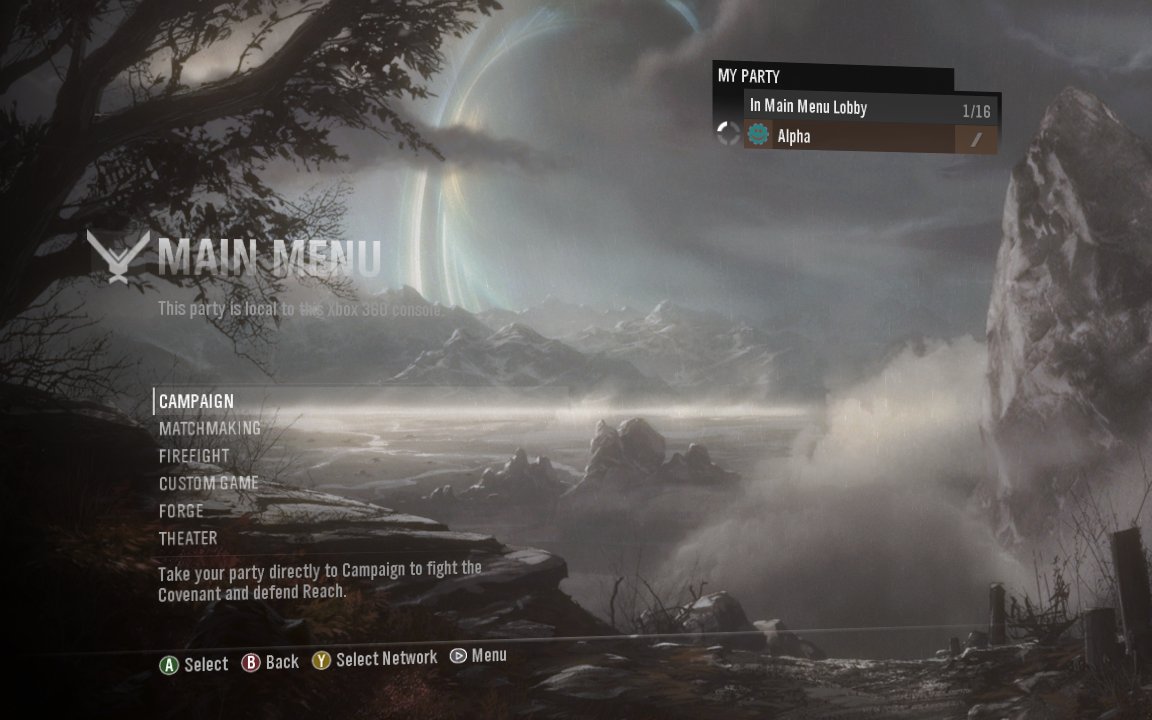 <br>Main menu | 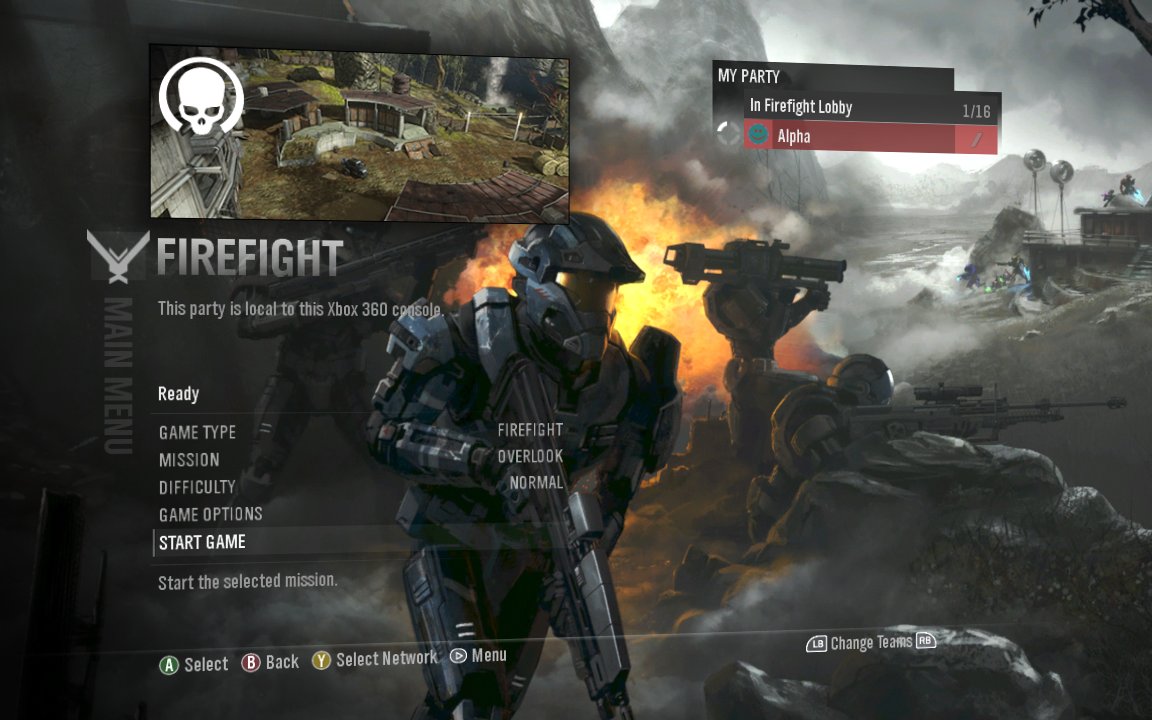 <br>Firefight lobby |
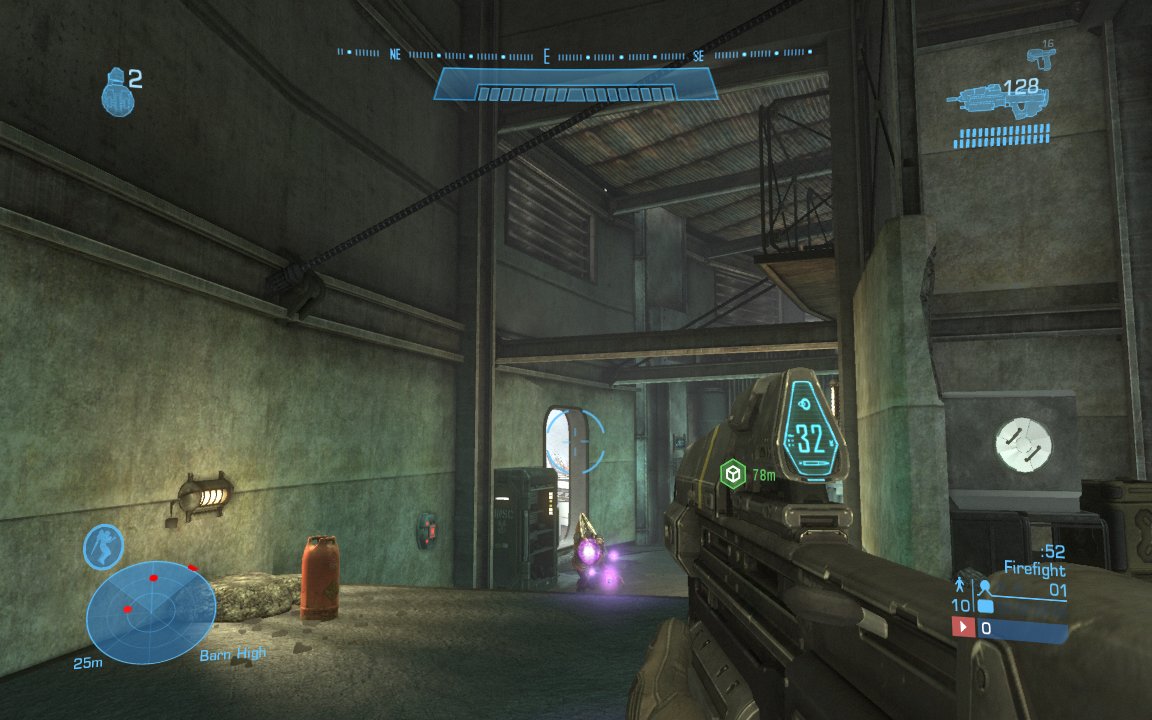 <br>Firefight, 60 fps | 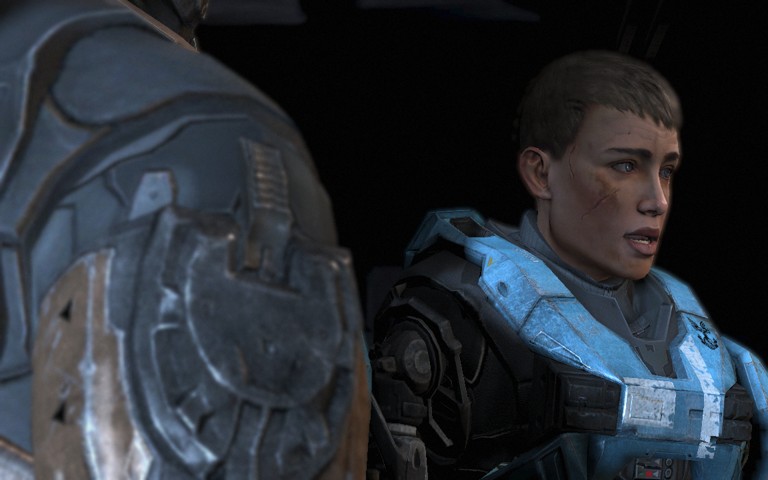 <br>Campaign opening cinematic |
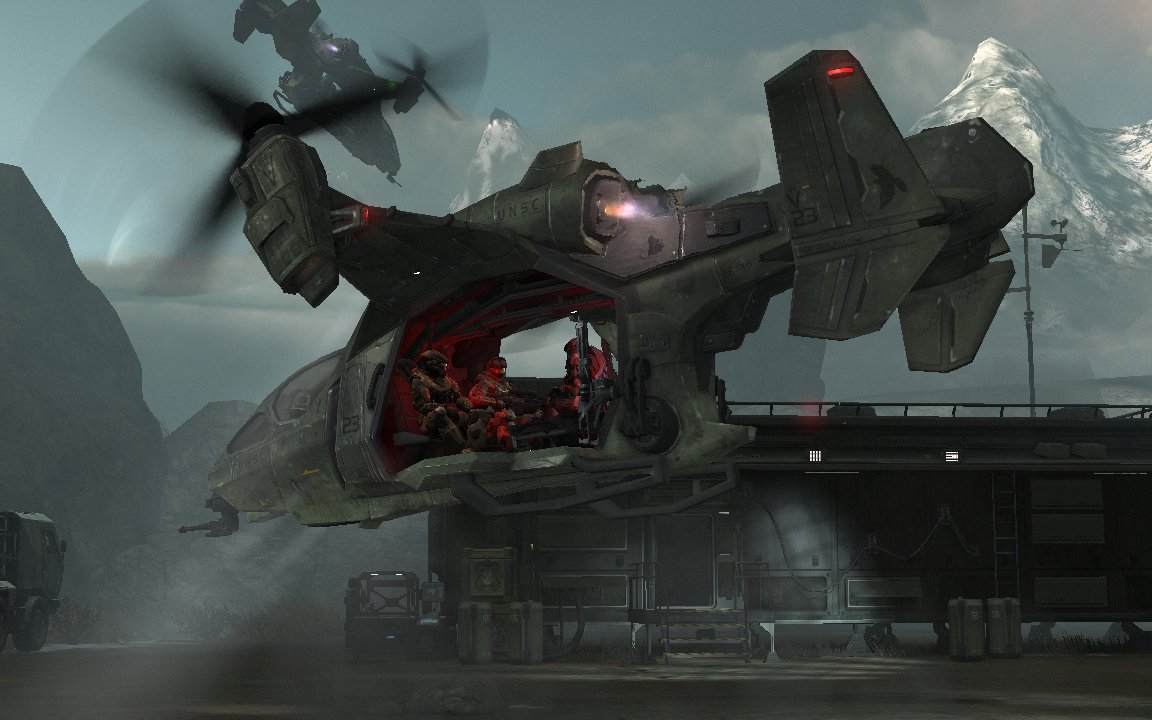 <br>Campaign, the flight to the first mission |
Goals
- Run the Xbox 360 build of Halo: Reach natively on x86-64 Linux, then Windows.
- Bring back the original Credits (cR), rank and Armory progression: earn cR by playing, rank up, buy armor with cR. No microtransactions.
- Peer-to-peer online play in place of Xbox Live / system link.
- Forge plus file share: upload and download maps, gametypes and mods.
How it works
default.xex(Title ID4D53085B, base version 1.0, Media ID566C10D3) and the four Waves audio DLLs it loads are translated function by function into C++ byrexglue codegen, driven byreach-recomp/reach_manifest.toml.- The ReXGlue runtime (derived from Xenia) provides the Xbox 360 kernel/XAM high-level emulation, the Xenos GPU on Vulkan, audio and the virtual file system.
- This repo supplies what the generic toolchain can't work out on its own:
reach-recomp/hints/: function boundaries and entry points the code scanner missed, plus statically linked XAPI routines mapped to native SDK versions (for example, the game's fiber switching).reach-recomp/src/: the app class and native overrides of kernel and XAM exports: the virtual network and Reach Live client, Xbox LIVE services (friends, presence, sessions, invites, title servers), offline challenges, keyboard and mouse, runtime fixes (critical sections, file sizes, enumeration codes), RSA public-key crypto, scripted input and frame dumps for automated tests, cross-DLL import thunks.server/: Reach Live, the self-hostable online server (standard-library Python).tools/: an ISO extractor, entry-point discovery against Ghidra, thunk generation, run and debug scripts, and Ghidra repair scripts.docs/: findings, the status log and debugging recipes.
Status
| Area | State |
|---|---|
Codegen of default.xex + 4 Waves DLLs | Done (~24k functions, about 167 MB of C++) |
| Native build (Linux, Clang) | Builds and links |
| Windows build | Cross-compiled from Linux (tools/build_windows.sh); release builds of both platforms come from CI in the maintainer's private repo (the binaries contain translated game code, so none are published here). Verified only under Proton on Linux: it plays the intro and reaches the menus with the Vulkan backend. Not yet tried on Windows itself |
| Boot | Kernel init, threads, cache partitions, fibers, RSA signature checks |
| Intro video | Plays |
| Title screen and start menu | Render correctly with the patched GPU plugin (the SDK bug behind the black menu is described in docs/menu_black_screen.md) |
| Campaign (Winter Contingency) | Loads, plays the opening and reaches gameplay; rendering matches Xenia after the SDK GPU patches (docs/sdk_patches.md); real occlusion queries, so the game no longer issues the water draw that hangs the GPU |
| Firefight, custom games, Theater | Play locally; films of past games play back in Theater |
| Progression (cR/rank/Armory) | Works offline: cR earned in play, rank-ups, Armory purchases saved in the profile, Spartan preview in the Armory and post-game screens, daily and weekly challenges picked locally each day, counting kills and paying out on completion (docs/progression_re.md); with a Reach Live server, progression is also stored server-side |
| Forge | Works locally: editing on Sword Base, object placement, saving map variants. Two players through Reach Live (one joins the other's Forge lobby from the roster): both play and switch to edit mode, a placed object shows in the other's budget, and the host saves a map variant. Checked once on Sword Base, two instances on one machine; moving and deleting objects and the System Link browser route were not tried |
| Online | Over the internet through a self-hosted Reach Live server: an emulated Xbox LIVE (friends roster, presence, joining a friend, invites) and System Link (the game's browser lists everyone's games). Tested with up to three players on one machine: Firefight and Slayer through the postgame, host migration. Direct peer-to-peer with NAT hole punching, relayed by the server when that fails (docs/online_plan.md section 5). Matchmaking: START MATCHMAKING on a server finds other players on the server's playlists (Free For All, Team Slayer, Capture the Flag, Objective), merges the groups, loads the map and plays, then searches again; the Playlist screen shows player counts and images, and cR/rank progression comes from matchmade games. Tested with two players on one machine; more than two, Arena and the Xbox LIVE party are not available (docs/online_plan.md section 5.4) |
| File share | Through Reach Live: upload maps and game types from the game's File Share UI, browse a friend's share from the roster and download into Local Files (docs/online_plan.md section 5.3) |
| 60, 120 and 144 fps | frame_rate = 60 runs the simulation at 60 ticks a second instead of 30. Checked in the campaign, Firefight, matchmaking and System Link; online, 30 and 60 fps players play together (network co-op runs at 30 ticks a second on every machine). frame_rate = 120 and 144 draw 120 or 144 frames a second with 60 or 72 ticks (two frames per tick: many of the game's tick counters are a byte); 144 needs SDK patch 0037 in the runtime (docs/framerate.md) |
| GPU emulation speed | SDK patches 0028-0032 cut the cost of the emulated GPU's command processor, memory watches and texture bindings. Measured in Forza Horizon (same SDK): a race went from 41 to 60 fps; Reach runs the same code (see docs/perf.md) |
| Higher resolution | resolution_scale = 2 in reach.toml (or --resolution_scale=2) renders at 2304×1440 instead of 1152×720; menus and Firefight checked, no artifacts seen. Frame rate on a dedicated GPU still to be measured |
| Keyboard and mouse | On by default next to pads: Halo-style bindings (rebindable kbm_bind_* cvars) and raw mouse look fed straight into player control, no stick emulation (docs/input.md) |
See docs/PROJECT.md for the detailed status log and debugging recipes.
Requirements
- Linux x86-64 with a Vulkan 1.3 GPU (tested on AMD with Mesa RADV). About 8 GB of free RAM per running game and 30 GB of disk (6.6 GB of extracted game files plus the build). Windows builds are cross-compiled from Linux (see Windows).
- Your own copy of Halo: Reach for Xbox 360 as a disc image (
.iso, base version, no title update). - Tools: Clang (tested with 23), CMake ≥ 3.25, Ninja, Python 3, Git,
unzip. Building the patched GPU plugin also needs the X11/XCB and Wayland development headers (on Fedora:libX11-devel libxcb-devel libXext-devel libXfixes-devel libXcursor-devel libXi-devel libXrandr-devel libXScrnSaver-devel libXrender-devel libXtst-devel wayland-devel; on immutable systems, Homebrew'slibx11 libxcb libxext libxfixes libxcursor libxi libxrandr libxscrnsaver libxrender libxtst xorgproto waylandwork too). - ReXGlue SDK 0.10.0.24 nightly
(
nightly-20261002-bd833a2a; later nightlies may not match the patches). - Optional, for reverse engineering: Ghidra 12.1.4 with XEXLoaderWV and GhidraMCP.
Building (Linux)
All commands run from the repository root.
# 1. The ReXGlue SDK nightly, unpacked to ~/rexglue-sdk-nightly/0.10.0.24/linux-amd64
mkdir -p ~/rexglue-sdk-nightly/0.10.0.24 && cd ~/rexglue-sdk-nightly/0.10.0.24
curl -LO https://github.com/rexglue/rexglue-sdk/releases/download/nightly-20261002-bd833a2a/rexglue-sdk-0.10.0.24-dev.gbd833a2-linux-amd64.zip
unzip rexglue-sdk-0.10.0.24-dev.gbd833a2-linux-amd64.zip   # creates linux-amd64/
cd -

# 2. The game files, extracted from your disc image (the image is only read)
python3 tools/xdvdfs_extract.py "/path/to/Halo - Reach.iso" extract extracted/xbox360

# 3. The patched Xenos GPU plugin and codegen tool: clones the SDK source to
#    ~/rexglue-sdk-src, applies patches/rexglue-sdk/ and installs an overlay at
#    ~/rexglue-sdk-patched (the stock plugin renders the menus black and lacks this
#    project's 22 rendering fixes; the stock rexglue's dot products differ from Xenon's)
tools/build_rexglue_sdk.sh

# 4. Configure and build. The first configure runs codegen on your default.xex with the
#    overlay's rexglue (the recompiled C++ goes to reach-recomp/generated/, a few
#    minutes); the build compiles it.
cmake -S reach-recomp -B reach-recomp/out/build/linux-nightly -G Ninja \
  -DCMAKE_BUILD_TYPE=Release -DCMAKE_CXX_COMPILER=clang++ \
  -DCMAKE_PREFIX_PATH=$HOME/rexglue-sdk-nightly/0.10.0.24/linux-amd64
ninja -C reach-recomp/out/build/linux-nightly
When reach-recomp/generated/ already holds codegen output made elsewhere, configure with
-DREACH_SKIP_CODEGEN=ON to compile it without default.xex. tools/package_linux.sh makes a
self-contained copy of the build in reach-recomp/out/dist/linux: the game, the SDK runtime
and patched GPU plugin, the ISO extractor and a launcher (./play.sh /path/to/extracted/xbox360).
Playing
tools/play.sh                        # play
tools/play.sh --resolution_scale=2   # render at 2304x1440 instead of 1152x720
-
Controls: keyboard and mouse work out of the box next to any controller: WASD, mouse look, left click fire, right click zoom, Space jump, Ctrl crouch, Q melee, G grenade, E/R reload and action, Shift armor ability, 1/2 or the wheel to switch weapons, Tab scoreboard, Esc menu (
docs/input.mdhas every binding). -
Settings live in
reach-recomp/out/build/linux-nightly/reach.toml, onename = valueper line, and in the in-game settings overlay (F4). For example:resolution_scale = 2 kbm_sensitivity = 3.0 live_server = "reach.example.org" # Reach Live server (see below) gamertag = "Noble Six" -
Vsync is on (no tearing);
vulkan_allow_present_mode_immediate = trueinreach.tomlturns it off,vulkan_allow_present_mode_mailbox = truepicks mailbox (docs/perf.md). -
Frame rate:
frame_rate = 60inreach.tomlruns the game at 60 fps instead of the console's 30. The game ticks at half the display rate, so it then also simulates 60 ticks a second (game time stays real time). Checked in the campaign, Firefight, matchmaking and System Link (docs/framerate.md). Online, players at 30 and 60 fps play together: co-op (campaign and Firefight) runs at 30 ticks a second on every machine, drawn at the machine's frame rate (objects move on the ticks), and multiplayer lets each machine tick at its own rate.frame_rate = 120or144draws 120 or 144 frames a second; the simulation then runs 60 or 72 ticks a second, each shown for two frames (the view, aiming and effects move every frame). 144 needs the runtime built with SDK patch 0037 (tools/build_rexglue_sdk.sh); without it the game runs at 120. -
Saves (profile, Credits, Armory, maps, films) are in
~/.local/share/reach/; the log is~/.local/share/reach/reach.log. -
Skip the intro video with Esc (Start); in menus Enter is A and Backspace is B.
Windows
The Windows version is cross-compiled from Linux with clang-cl and lld-link, after the Linux
build above (its codegen output is reused, and step 3 checks out the SDK source).
tools/build_windows.sh builds the ReXGlue SDK for Windows from that source with this
project's patches and the Vulkan backend (the SDK's prebuilt Windows GPU plugin has none),
then the game, and packages it in reach-recomp/out/dist/windows:
# Homebrew's LLVM and lld provide clang, clang-cl and lld-link
brew install llvm lld

# The MSVC CRT and Windows SDK, unpacked by xwin (a release binary from
# https://github.com/Jake-Shadle/xwin/releases, or cargo install xwin).
# Running it means accepting Microsoft's license.
xwin --accept-license splat --output ~/.local/opt/xwin/sdk

tools/build_windows.sh
On Windows, copy reach-recomp/out/dist/windows anywhere, install the Microsoft Visual C++
2015-2022 x64 redistributable, and run it with your extracted game files:
reach.exe --game_data_root=C:\path\to\extracted\xbox360
reach.toml next to reach.exe takes the same settings as on Linux; gpu_backend = "vulkan" (the default) uses the backend with this project's fixes, "d3d12" the SDK's
Direct3D 12 one. Saves and the Reach Live identity go to Documents\reach.
So far the Windows build is tested under Proton on Linux, not on Windows itself.
Playing online (Reach Live)
Reach Live is a small server that stands in for Xbox LIVE and Bungie's services. With it the game signs in to an emulated Xbox LIVE: everyone on the server is your friend, friends in a game show up in the lobby roster, X joins them and Invite to Party in a friend's player menu brings them to you; System Link (Y, Select Network) lists everyone's System Link games. Credits, ranks and Armory unlocks sync to the server, and File Share uploads and downloads go through it.
Joining a server: add live_server = "host" (or "host:port") to reach.toml, or run
REACH_SERVER=host tools/play.sh. Your gamertag is in
~/.local/share/reach/4D53085B/live_identity.txt (created on the first online run; edit it
or set gamertag). live_room = "name" keeps a group of players to themselves;
live_signin = false turns the Xbox LIVE emulation off (System Link only).
Running a server needs Python 3 (no packages) or Docker:
python3 server/reach_live_server.py --port 21100 --http-port 21101 --data-dir reach_live_data
# or
docker build -t reach-live server/
docker run -d -p 21100:21100/udp -p 21101:21101 -v reach-live-data:/data reach-live
- Open UDP 21100 (game traffic, rendezvous and relay) and TCP 21101 (Bungie's
services: rewards sync, File Share, presence; also a JSON status page at
/status). - The data directory keeps players' progression and File Share files.
- Players connect directly to each other through UDP hole punching; when their routers
don't allow it the server relays the game (a few KB/s per player;
--rate-limitcaps it, 64 KB/s per player by default). Players behind strict NATs can forward one UDP port and setREACH_NET_PORTto it. - Protocol and design:
docs/online_plan.mdsection 5.
Developer tools
tools/run_reach.sh SECONDSruns a time-limited test that skips the intro (logs in/tmp/reach_run.log).tools/bench.sh menu|gameplay [--cold]measures frame rate and stutter on the main menu or in a Custom Game (RECOMP_PERF=1logs the same statistics in any run;docs/perf.md).tools/live_session.sh DIR/tools/live_step.sh DIR WAIT INPUT...drive a game from a script (input FIFO, frame dumps);tools/live_shot.sh DIRsaves what the window shows.tools/system_link_pair.sh DIR_A DIR_Bstarts two games on one machine in a System Link lobby (withREACH_SERVER, through a Reach Live server).server/test_reach_live_server.py,server/test_reach_live_lsp.py: server tests.tools/gsdiff.pycompares game state dumps of two machines in a co-op game (REACH_GSDUMP,docs/framerate.md).docs/PROJECT.mdhas the status log and debugging recipes (RenderDoc, gdb, guest memory).
Troubleshooting
- Menus or textures are black / too dark: the stock GPU plugin is loaded. Run
tools/build_rexglue_sdk.shand usetools/play.sh(it loads the patched overlay). - The game dies with SIGBUS at start:
/dev/shmis full of guest memory left by killed games (5 GB each);tools/play.shremoves orphaned/dev/shm/xenia_memory_*files when it exits, or delete the ones no running game uses. - No online players: check that the server's UDP port is reachable and that both
players use the same
live_room; the server's/statuspage lists who is connected.
Repository layout
| Path | What |
|---|---|
reach-recomp/reach_manifest.toml | Codegen manifest: main executable and guest DLL modules |
reach-recomp/hints/ | Function boundary, entry point and native-replacement ([rexcrt]) hints |
reach-recomp/src/ | Our runtime code: app setup, kernel overrides, cross-DLL thunks |
reach-recomp/generated/ | Codegen output. Not committed here (translated game code), except the SDK's rexglue.cmake. The maintainer keeps a private copy, synced with tools/sync_generated_repo.sh |
patches/rexglue-sdk/ | Fixes we carry on top of the ReXGlue SDK (built by tools/build_rexglue_sdk.sh) |
server/ | Reach Live, the self-hostable online server (and its Dockerfile) |
tools/ | Extraction, analysis, run and debug tooling (tools/renderdoc/: GPU capture analysis) |
docs/ | Project log, debugging recipes, reverse-engineering notes |
docs/symbols/ | Function names recovered in Ghidra (address,name CSV) |
Legal
This project is not affiliated with, endorsed by or sponsored by Microsoft, Xbox Game Studios, 343 Industries or Bungie. Halo and Halo: Reach are trademarks of Microsoft Corporation.
The repository distributes no copyrighted game material: no executables, no recompiled game code, no maps, videos or other assets. The build only works with game files you extract from a copy you legally own.
Credits
- ReXGlue SDK: recompiler and runtime
- Xenia: the emulator the runtime's kernel and GPU layers derive from, and our reference for differential debugging
- XenonRecomp: the pioneering Xbox 360 static recompiler
- GhidraMCP and XEXLoaderWV: reverse-engineering tooling
License
The code in this repository is released under the MIT License. This does not cover the game, its assets, or the third-party SDKs and tools it uses.