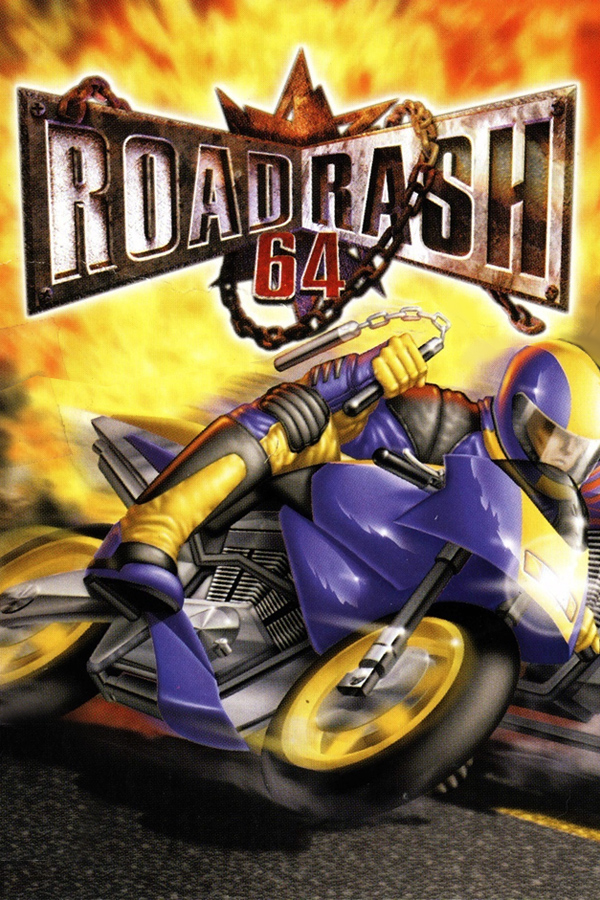
Road Rash (Native Port)
Road Rash
OrigenWindows / Sega Mega Drive / Genesis
TecnologíaPort Nativo C/C++ (Reimplementación de Motor)
Disponible paraWeb, macOS, Android
Ver proyecto oficialSobre el proyecto
Road Rash es un videojuego de carreras de motos de 1994 desarrollado y publicado por Electronic Arts. Combina carreras a alta velocidad por recorridos largos con combate cuerpo a cuerpo contra pilotos rivales, persecuciones policiales y un modo carrera basado en ganar dinero y comprar motos más rápidas.
Información oficial del proyecto
Road Rash — Native Port
Native C++20 / SDL3 port of the 1996 Windows rerelease of Road Rash. Runs the game directly on modern systems: no Wine, no x86 emulation at runtime.
Platforms: macOS ARM64 (primary), Android ARM64, Linux x86-64/ARM64 (including Steam Deck) and Windows x64/ARM64, plus a WebAssembly browser build. Linux and Windows builds, tests and packages are done (plans 33a and 33b); Android, Linux, Steam Deck and Windows still await testing on real hardware. The port is incomplete; see Status below.
Reference for reverse engineering is the unmodified disc binary at
../cdrom/ROADRASH/ROADRASH.EXE. Oracle captures run it under Wine to
produce comparison traces. It is never executed by the game itself.
Status
The port is playable but not finished. rr-game runs the full original
front end (menus, Thrash and Big Game careers, shop, Schmooze, results,
saves, credits) into races on all five courses (Napa, City, Highway,
Canyon, Medley). Races have the original bike physics, AI field, combat,
traffic, pedestrians, police, engine and effect audio, soundtrack and
cutscenes. Online mano-a-mano for two to eight players (plan 34) works over
the internet through the rr-netd server, with room codes and invite links.
Measured against the original:
- Simulation: Napa level 1 with the full 14-rider field matches for 2400/2400 ticks; a recorded human-input run matches for 1431/1431 ticks. Both use one RNG anchor and then run freely.
- Police: pursuit, siren and arrest match tick for tick on parked, crashed and on-foot captures, and on City up to the arrest.
- Front end: all 223 original menu items pass the layout sweep. Menu pictures are bit-exact against the original's decoded images, and menu text is Wine-GDI exact. 18 of 20 captured screens match the original pixel for pixel; the other two differ only in rows the port adds (Display) or gates on the network (Mano-À-Mano). Seeded original-writer saves round-trip byte for byte, as do saves from a driven career.
- Tests: 134/134 CTests with the disc and zero skips on macOS and on Linux (GCC and Clang, x86-64 and ARM64); ASan/UBSan and TSan clean.
- Determinism: the determinism matrix gives equal race results on macOS, Linux (GCC/Clang, x86-64/ARM64), Windows (MSVC, clang-cl, ARM64) and WebAssembly. In CI, bots on six platforms (macOS, Linux x86-64/ARM64, Windows x64/ARM64, WebAssembly under Node) finish one live online room with equal hashes and an official result. A real browser tab in a mixed room has not been tested yet.
Platforms:
| Platform | State |
|---|---|
| macOS ARM64 | Main development target; app bundle and zip |
| Android ARM64 | APK builds; not yet tested on a device |
| Linux x86-64/ARM64, Steam Deck | Tarball, AppImage and Flatpak built and smoke-tested on clean distributions; not yet tested on a real desktop or a Deck (plan 33a) |
| Windows x64/ARM64 | Zip and per-user installer built and install-tested on CI; unsigned; not yet tested on real hardware (plan 33b) |
| Browser (WebAssembly) | Playable; see docs/WEB.md |
Still open (see docs/CURRENT_STATUS.md and docs/PROGRESS.md):
- Simulation parity outside the captured runs: other courses and levels, City AI RNG past tick 954, human paths beyond the recorded run, and isolated fight, steal and traffic cases (plans 10, 16, 17).
- Front end: AWE32 music timbre. The SoundFont banks play with their generator semantics and stand-in reverb and chorus, but nothing has been measured against real AWE32 hardware, and the factory-ROM instruments need an owner-supplied ROM dump. Filled controls key labels have no original capture to compare against.
- Online: device and cross-play acceptance on Android and real desktops, and the long soak tests (plan 34 Tasks 10–11).
- Hardware: Android, desktop Linux, Steam Deck and Windows (plans 14, 33a, 33b). Owner decisions remain on signing, the licence and Flathub (plan 15).
Browser build
The same game now runs as WebAssembly. Run tools/build_web.sh, then serve
build-agent-browser/dist/ with a local HTTP server. Import your original PC
disc ISO or ROADRASH folder; files stay in private browser storage. Choose
Quick race for immediate play or Start game for the original frontend.
See docs/WEB.md for deployment, tests and current limitations.
Requirements
- Your own 1997 Windows rerelease disc (ISO or extracted
ROADRASHfolder, 341 files, SHA-256 verified on import). No game data is included or redistributed. - CMake 3.22+, a C++20 compiler, SDL3 3.2+ (
brew install cmake sdl3). Linux: GCC 14 or Clang 19 withcmake --preset linux-gcc(orlinux-clang); the pinned SDL is built from source, andlinux/install-gate-deps.shlists the Debian packages. Windows: Visual Studio 2022 withcmake --preset windows-msvc(see Windows packaging). - Android builds additionally need JDK 21, Android SDK 35 / NDK 28, Gradle
wrapper in
android/.
Quick start
Each script builds rr-game and launches it. It passes --assets when the
disc is at ../cdrom/ROADRASH (or the folder given as the first argument)
and otherwise opens the first-run import screen. Further arguments go to
rr-game.
macOS:
./run-macos.sh                       # Release build in build-play/, launch game
./run-macos.sh --debug               # Debug build in build/ (slower renderer)
Linux (x86-64 or ARM64; on a Steam Deck use the AppImage instead):
./run-linux.sh                       # Release build in build-play/, launch game
./run-linux.sh --debug               # Debug build in build/
If a tool or library is missing, it prints the install command for Debian/Ubuntu, Fedora or Arch. It needs GCC 13+ or Clang 17+.
Windows (x64 or ARM64; Visual Studio 2022 or its Build Tools with "Desktop development with C++", plus Git and Python 3):
rem Release build in build-windows-msvc\ (ARM64: build-windows-msvc-arm64\)
run-windows.bat
rem Debug configuration (slower renderer)
run-windows.bat -Debug
run-windows.ps1 does the same from PowerShell. It enters the MSVC
environment itself, and the first run clones vcpkg into .tools\vcpkg
unless VCPKG_ROOT or VCPKG_INSTALLATION_ROOT points to one. Add
--console to see the game's output in the terminal.
Or with CMake directly:
cmake -S . -B build -DCMAKE_BUILD_TYPE=Debug
cmake --build build --parallel
ctest --test-dir build --output-on-failure
build/rr-game --assets ../cdrom/ROADRASH
Options:
build/rr-game --assets ../cdrom/ROADRASH --course 0 --level 1 --bike 0
build/rr-game --assets ../cdrom/ROADRASH --video VIDEO/INTRO.AVI
--course 0-4 (Napa, City, Highway, Canyon, Medley),
--level 1-5, --bike 0-14, --character 1-8 (Axle .. Teflon Mike).
An interactive quick race is a Thrash race in the original front end: it
ends on the original results and standings screens, then the Thrash menus.
Omitting race flags enters the menu/career flow. --ticks N --screenshot out.bmp runs a headless verification slice; tool runs (--ticks,
--autopilot, captures, benchmarks, --opponents) keep the standalone race.
Controls
| Action | Keyboard | Gamepad | Touch |
|---|---|---|---|
| Accelerate | Up / W | South / RT | Free zones (auto-throttle) |
| Brake | Down / S | East / LT | Bottom-middle zone |
| Steer | Left/Right, A/D | D-pad / left stick | Left/right thirds |
| Punch / Kick / Backhand | Z / X / C | West / North / RB | Top third |
| Pause | P / Esc | Start | System Back / pause tap |
| Restart after finish | Enter | South | Tap |
| Quit (desktop) | Q | — | — |
P/Esc/Start opens the pause menu (Resume, Sound, Display, Controls, Quit Race with confirmation). Backgrounding, focus loss, or disconnecting the active gamepad also pauses; resume is always explicit. Keys are rebindable in Graphics Options → Configure Input; gamepad mapping is fixed except punch/kick swap and stick dead zone.
Disc import
First launch without --assets shows the import screen: pick the ISO or an
extracted folder. The importer verifies all 341 files by SHA-256 and commits
only a complete match; failures leave any existing install untouched.
Command-line equivalent:
build/rr-import "/path/to/Road Rash.iso" "/path/to/imported/ROADRASH"
build/rr-game --assets "/path/to/imported/ROADRASH"
Default destination is the SDL pref dir RoadRashNative/RoadRash/game/ROADRASH.
RR_PREF_OVERRIDE redirects it for isolated test runs.
Tools
| Binary / script | Purpose |
|---|---|
build/rr-game | The game (menus, career, races, video playback) |
build/rr-viewer (./run-viewer.sh) | Asset research viewer, not the game: screens, course drive-through |
build/rr-import | CLI disc import with hash verification |
build/rr-inspect FILE.RSC | Dump a resource container directory |
build/rr-course --exe ../cdrom/ROADRASH/ROADRASH.EXE DATA/COURSES/*.CRS | Course graph / projection sweep |
python3 tools/check_corpus.py <assets> | Validate all resource containers |
python3 tools/render_demo.py | Render a 2-minute 5-course demo MP4 from the engine |
tools/bench_game.sh user original enhanced | Race frame-time benchmark (docs/PERFORMANCE.md) |
tools/ci.sh | Local verification gate (native build, tests, APK assembly) |
Video playback uses native Cinepak / IMA-ADPCM decoders. FFmpeg appears only in tests as a decode oracle; runtime needs neither FFmpeg nor Wine.
Android
export JAVA_HOME=/opt/homebrew/opt/openjdk@21/libexec/openjdk.jdk/Contents/Home
android/gradlew -p android assembleDebug
Output: android/app/build/outputs/apk/debug/app-debug.apk.
Normal APKs ship no game data; on first launch pick your own ISO and it is
verified the same way as desktop. SDK location lives in the ignored
android/local.properties. Optimized local build:
assembleRelease -PreleaseDebugSigning=true. Owner signing and versioning
are documented in docs/USER_GUIDE.md. Device behavior is unverified.
macOS packaging
tools/build_macos_app.sh
Produces build-release/Road Rash Native.app and a ZIP with pinned static
SDL3, ARM64 / macOS 13 baseline, bundled licences, ad-hoc signature, and no
game data. Pushing a v* tag builds and attaches the same package via
GitHub Actions.
Windows packaging
From an MSVC developer prompt (windows-msvc-arm64 for ARM64):
cmake --preset windows-msvc
cmake --build build-windows-msvc --config Release
python tools/build_windows_package.py --build-dir build-windows-msvc --arch x64
python tools/verify_windows_package.py build-windows-msvc\package\RoadRashNative-<version>-windows-x64.zip --arch x64 --run
Produces a portable zip (portable.txt keeps data beside the exe) and, with
Inno Setup 6.3+, a per-user installer, both with a static CRT and SDL, so
they need no DLLs beyond Windows' own, and no game data. tools/sign_windows.ps1 signs them when the owner sets
RR_SIGN_*; otherwise they are unsigned and SmartScreen warns. The verifier
needs pip install pefile. CI builds and install-tests both architectures.
Linux packaging
Needs Docker (on a Mac, OrbStack or Docker Desktop builds both architectures; x86-64 runs under emulation):
tools/build_linux_package.sh x86_64       # or aarch64
tools/linux_clean_host_smoke.sh build-linux-package/RoadRashNative-<version>-linux-x86_64.tar.gz \
    build-linux-package/RoadRashNative-<version>-x86_64.AppImage x86_64
tools/build_linux_flatpak.sh x86_64       # committed HEAD only
The tarball and AppImage are built in the Steam Runtime "sniper" SDK
container (glibc 2.31 baseline) with static SDL, OpenSSL and libstdc++, so
they need only glibc and whatever display and audio libraries the system
has; tools/verify_linux_package.py checks that, the absence of game data
and (on Linux) that both launch. The Flatpak builds from source against the
freedesktop 24.08 runtime. Linux native gate: tools/linux_gate.sh linux-gcc
inside the linux/gate.Dockerfile image (see docs/TOOLING.md).
Docs map
docs/CURRENT_STATUS.md— evidence matrix and latest gate receipts.docs/PROGRESS.md— what is ported, approximations, next steps.docs/VERIFICATION.md— commands run, outcomes, skips, evidence paths.docs/REVERSE_ENGINEERING.md— recovered structures and addresses.docs/USER_GUIDE.md— install, import, settings, controls reference.docs/plans/00-INDEX.md— plan dependency order to completion.docs/AGENT_TOOLING.md— agent workflow, gates, capture rules.
Commercial assets, disc dumps, and upscaled artwork stay local and out of
the source tree, APKs, and app bundles. Third-party licence texts are in
third_party/. No redistribution licence for the game is implied.