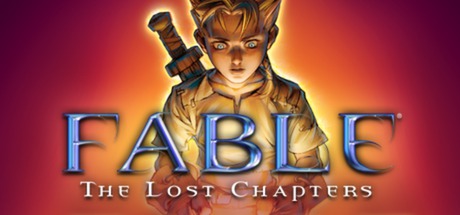
Fable: The Lost Chapters
About the project
Fable: The Lost Chapters es un juego basado en el éxito de ventas de su antecesor Fable para Xbox, producido por la compañía Lionhead Studios. Fue lanzado para PC el 20 de septiembre de 2005, y para Xbox el 18 de octubre del mismo año.
Official project information
Fable: The Lost Chapters — Decompilation & Native Modding
An evidence-gated reconstruction of the native 32-bit Windows
Fable.exe, targeting readable, buildable C/C++ source and a durable native
modding platform.
Actively developed — October 24, 2026. Native C/C++ reconstruction is continuing. Recent local tests render a retail title sprite through recovered drawing routines and validate connected texture-loading and lifetime paths. The existing interactive frontend is an authored integration checkpoint, not proof that the reconstructed native engine boots or that the game is playable. Latest native progress and remaining boundaries.
Run the checkpoint · See current progress · Read the roadmap · Browse the documentation · Project layout and workspace care
<a id="contents"></a>
Contents
- Project
- Current progress
- Run the checkpoint
- What works today
- Roadmap
- Verification pipeline
- Documentation
- Repository layout
- Project boundaries
- Why this is tractable
<a id="project"></a>
1. Project
The goal is a full decompilation of Fable: The Lost Chapters for PC: a complete source reconstruction that can be understood, built, tested, and extended.
This is not a source port or a static recompilation of another architecture. TLC already ships as a clean native x86-32 PE built with Microsoft Visual C++ 7.1. The project combines static analysis, donor-symbol recovery, live instrumentation, original-compiler reconstruction, and retail-byte comparison.
The work has three connected outputs:
- Decompilation: faithful VC7.1-compatible source, one verified function at a time.
- Runnable reconstruction: recovered startup, frontend, rendering, media, and eventually gameplay systems connected into executables.
- Native tooling: reusable format, scripting, editor, viewer, and modding knowledge produced by the reverse engineering.
Where to look first: ROADMAP.md is the single task list (done / in flight / next), HANDOFF.md is the one-page resume point, ARCHITECTURE.md explains the source layers, BUILDING.md the toolchain, and CONTRIBUTING.md the landing rules. The full strategy is in FULL_DECOMP.md; every other document is listed in docs/INDEX.md.
On readability. Early landed code modelled this with throwaway local structs
(struct T { char pad[0x1a8]; ... }). Since 2026-09-07 the class layouts recovered from the debug
PDB are emitted as compilable, PDB-named headers in rebuild/include/engine/, and landed functions are
retyped onto them only when the rewritten file still compiles to the identical retail bytes. The
"Readability" rows in the metrics below track that conversion; the remaining generic declarations are
a worklist, not the intended end state.
<a id="current-progress"></a>
2. Current progress
Latest activity: October 10, 2026. See the native development update
for recent recovery and real-GPU validation. This publication updates project
status; the newer local source/test checkpoint is not yet merged into main.
The generated whole-project figures below remain the September 7 snapshot,
not current completion estimates. Native subsystem checkpoint counts must not
be added to these totals without a reconciled dashboard refresh.
| Snapshot | Current result |
|---|---|
| Catalogued retail functions | 49,568 |
| Verified functional or matching reconstruction | 18,579 · 37.48% |
| Byte-identical reconstruction | 8,082 · 16.30% |
| Accepted analysis naming quality | 99.211% |
| Runnable milestone | Authored integration checkpoint: boot movies + interactive frontend, Saved Games, and Options screens |
Snapshot functional-or-matching coverage is 37.48% of the 49,568-function catalog. Of that verified set, 16.30% is byte-identical C++. The first 5% byte-match milestone has been passed.
<details> <summary><strong>Full generated metrics</strong></summary>The canonical refresh updates this table from the checked compile, behavior, parity, coverage, and naming reports:
| Track | Metric | Status |
|---|---|---|
| Analysis DB | Functions catalogued | 49,568 |
| Analysis DB | Mechanically named (no FUN_*) | 100.000% |
| Analysis DB | Accepted naming quality | 99.211% |
| Analysis DB | Usable reconstruction/navigation names | 99.913% |
| Analysis DB | Calling convention known | 77.746% |
| Analysis DB | Complete non-undefined prototype | 69.174% |
| Reconstruction | Curated sources, VC7.1-compiled and behaviour-gated | 18,604 |
| Reconstruction | Verified functional or matching C++ | 18,579 (37.48%) |
| Reconstruction | — of which byte-identical C++ | 8,082 (16.30%) |
| Reconstruction | — of which hand-written asm bakes (grade asm_bake, not counted as reconstruction) | 292 |
| Readability | Landed sources typed onto shared PDB-named engine headers | 651 |
| Readability | Throwaway local struct T {...} declarations remaining | 4,417 |
| Reconstruction | Compiled sources still honestly DIFFER | 43 |
| Reconstruction | Compiled rows lacking a Ghidra function-start oracle | 0 |
| Auto-RE intake | Generated candidates / structural checker PASS | 1,066 / 1,053 |
| Boot path | GFMain direct-call sites proven | 257 / 257 (100.00%) |
| Boot path | Callable authored GFMain phases | 10 / 10 (100.00%) |
| Boot path | Current Phase 10 direct calls proven | 21 / 21 (100.00%) |
| Modern C++23 | GFMain phases promoted into the modern startup lane | 0 / 10 (0.00%) |
Counts above are from the 2026-09-07 canonical refresh:
rebuild/manifest/status.json, rebuild/compile-gate/retail-parity.json,
rebuild/COVERAGE.md, and the naming-quality reports.
Generated agent output is tracked separately and is never counted merely
because a structural checker accepted it. The 37.48% figure is intentionally the strict,
whole-executable denominator. Boot-path figures are a separate view of
the 3,952-byte GFMain coordinator, not an estimate of total engineering time.
The C++23 startup figure is deliberately separate too: exact x86 parity and
readable integration work do not count as a modern port merely because their
interfaces are becoming stable.
The public dashboard is refreshed only after the compile/parity pipeline has settled. Unreviewed background-agent output does not silently change these numbers.
<p align="right"><a href="#contents">back to contents</a></p><a id="run-the-checkpoint"></a>
3. Run the checkpoint
This runs the authored frontend/integration checkpoint already published in
main. It is not a playable native-engine reconstruction or the newer local
retail-title raster test described in the October update.
From the repository root:
powershell -ExecutionPolicy Bypass -File rebuild/build_bootstrap.ps1
Then launch the retail-layout checkpoint with the optional BuffJesus text variant:
.\rebuild\build\bootstrap-Release\FableTLC-Reconstruction-VisualCheckpoint.exe --buff-jesus
Useful switches:
| Switch | Behavior |
|---|---|
--buff-jesus | Changes main-menu strings while preserving retail geometry, actions, videos, and assets. |
--skip-boot-videos | Fast developer launch directly into the frontend. |
--retail-video | Exercises the recovered retail movie path. |
--retail-video-upscaled | Uses an explicitly generated local 2× video cache when available. |
The normal BuffJesus path includes Lionhead, Microsoft, and intro_comp
movies. Escape skips the current movie. Retail banks are read from the local
game installation at build/runtime; they are not committed to this repository.
For smoke commands, prerequisites, individual movie modes, and the honest runtime boundary, see rebuild/RUNNABLE.md.
<p align="right"><a href="#contents">back to contents</a></p><a id="what-works-today"></a>
4. What works today
| Area | Verified state | Major remaining boundary |
|---|---|---|
| Analysis database | Nearly complete navigation-quality names with recovered prototypes and calling conventions | Resolve the remaining ambiguous types, function starts, and hard naming stragglers |
| Function reconstruction | See the generated metrics above (byte-identical genuine C++, functional-or-matching, asm bakes reported separately) | Continue strict promotion; retype landed code onto the shared PDB-named headers; de-bake the asm_bake grade |
| Startup | Retail-matched WinMain, all ten authored GFMain phases callable, connected exact GFInitialise, progress-display ownership | Replace the remaining GFMain dependency boundaries and pursue whole-coordinator retail parity |
| Frontend | Boot movies, retail-data-driven interactive menus, CUIState-driven main-menu/Save/Options rows, keyboard/mouse/controller navigation, Credits routing, profile/delete/new-profile branches, Continue-to-Saved-Games routing, and retail list/transition sounds | Visual sign-off is still open: compare identical retail/reconstruction captures; link native profile persistence and validated save action 0x11 only at their recovered manager/game boundaries |
| Controls | Interactive capture/cancel/apply, duplicate clearing, W/S/A/D movement expansion, arrow/WASD reset actions, and recovered wheel/arrow ingress for authored scrolling lists | Full 31-action Redefine materialization/filtering/coexistence, profile persistence, and remaining controller/action ownership |
| Video | Retail movie order, end-of-stream advancement, Escape skip, and D3D9 texture publication | Replace the compatibility presentation seam with reconstructed CTexture/CMovie::Draw submission |
| Particles and lighting | Asset reports, billboard/crossed-sprite contracts, blend state, shader assembly, environment/RSA lookup, sky inputs | Recover constant semantics, signed/special passes, shadows, and golden viewer captures |
| Modding research | Broad readers/writers for definitions, levels, terrain, meshes, animation, audio, text, quests, and saves | Consolidate them behind safe product workflows and runtime validation |
| Cut multiplayer | Player slots, event/package codecs, local initialization, and a grounded revival plan are documented | Reconstruct synchronization, seating, lifecycle, and transport before enabling anything |
This table is a landing-page summary. Detailed addresses, byte counts, evidence, and caveats
live in the subsystem documents (docs/engine/, docs/formats/, docs/pipeline/); the
chronological record is docs/journal/.
<a id="roadmap"></a>
5. Roadmap
The roadmap is a checklist, not prose: docs/ROADMAP.md. It has one
"current focus" block and seven lanes (repo health, symbols and types, byte-parity
reconstruction, runnable frontend, engine subsystem RE, quest-script recovery, modding
toolchain), each with [x] done / [ ] open items that point at their owning document.
Superseded plans are archived under docs/journal/.
<a id="verification-pipeline"></a>
6. Verification pipeline
Every promoted function passes an evidence chain:
- Recover — Ghidra, donor PDB/BSim evidence, runtime traces, and retail bytes establish identity, boundaries, ABI, and behavior.
- Author — readable C++03/VC7.1-compatible source is placed in the address-sharded reconstruction tree.
- Test — the original VC7.1 compiler builds the function and a focused behavior fixture exercises its contract.
- Compare — object
.textis compared with authoritative retail bytes, with only real COFF relocation fields normalized. - Land — only reviewed
MATCH,RELOCATION_MATCH, or explicitly behavior-only results enter their corresponding honest totals.
The result is intentionally conservative:
MATCHmeans byte-identical.RELOCATION_MATCHmeans identical after expected relocation normalization.DIFFERremains visible even when behavior passes.ORACLE_MISSINGis never guessed into parity.- Generated/structural
PASSis intake, not reconstruction credit.
Implementation details:
<p align="right"><a href="#contents">back to contents</a></p><a id="documentation"></a>
7. Documentation
Inspired by documentation-first projects, this README is the index; deep technical material lives in focused documents.
Start here
| Document | Purpose |
|---|---|
| NATIVE_STATUS.md | Latest native development update and publication boundaries |
| HANDOFF.md | Current public handoff and historical resume state |
| ACTIVE_TASK_LIST.md | Ranked work with acceptance gates |
| rebuild/RUNNABLE.md | Build, launch, smoke, and runtime-boundary instructions |
| TOOLCHAIN.md | Ghidra, BSim, FSE, VC7.1, and local prerequisites |
| CAPABILITY_INDEX.md | Index of recovered tooling and format capabilities |
Reconstruction
| Document | Purpose |
|---|---|
| FULL_DECOMP.md | Full-decomp strategy and promotion model |
| TECHNICAL_BRIEF.md | Current architecture, evidence grades, boot status, and modernization boundaries |
| SOURCE_ARCHITECTURE.md | Generated, parity, and modern-source boundaries |
| BSIM_PORT.md | Donor-symbol porting runbook |
| DECOMP_ACCELERATORS.md | Automation and throughput options |
| UNICORN_EMULATION_PLAN.md | Optional bounded x86 behavior-oracle pilot |
Runtime, UI, and rendering
| Document | Purpose |
|---|---|
| FRONTEND_FORMAT.md | Recovered frontend definitions, tables, actions, and transforms |
| VIDEO_SYSTEM_RE.md | CVideoSys/CMovie, DirectShow, and texture-presentation recovery |
| PARTICLE_LIGHTING_VIEWER_HANDOFF.md | Particles, billboards, RSA/environment lighting, shaders, sky, and shadows |
| UI_UPSCALE_PLAN.md | Optional high-resolution cache policy and validation |
| COOP_REVIVAL.md | Evidence and safe order for the cut multiplayer system |
Content and modding
| Document | Purpose |
|---|---|
| COMPREHENSIVE_MODDING_ENVIRONMENT.md | Overall tool/editor environment |
| CONTENT_AUTHORING_PLAN.md | Safe content-creation workflow |
| SYSTEMS_ANALYSIS.md | Per-subsystem maps and moddability verdicts |
| FINDINGS.md | Cross-checked technical findings |
| FABLE_TLC_REPORTED_BUGS.md | Evidence template for reported game defects |
The docs/ directory contains focused references for definitions, BIG
archives, textures, meshes, animation, audio, terrain, navigation, quests,
scripts, saves, and editor integration.
<a id="repository-layout"></a>
8. Repository layout
| Path | Contents |
|---|---|
rebuild/ | Buildable reconstruction, tests, manifests, oracles, integration, and parity reports |
lift/ | Auto-RE candidate reports, configuration, and durable worker state |
ghidra_out/ | Reproducible labels, APIs, decompilation exports, and naming audits |
tools/ | Ghidra scripts, promotion pipeline, reports, asset/format tools, and smokes |
docs/ | Technical references, plans, runbooks, and handoffs |
refs/ | FSE and other compact reference manifests |
work/, snapshots/, dist/ | Ignored local experiments, generated artifacts, and share packages |
See WORKSPACE_LAYOUT.md for ownership and cleanup rules.
<p align="right"><a href="#contents">back to contents</a></p><a id="project-boundaries"></a>
9. Project boundaries
- No retail executable, artwork, video, archive, PDB, or decoded asset is committed.
- Retail-derived screenshots, texture decodes, model renders, Blender files, and byte-oracle extracts are local-only test outputs and are ignored by Git. Tests must generate them from a user-supplied installation outside the repository.
- A local retail installation is used as read-only evidence and asset input.
- Generated agent code is never treated as verified merely because it exists.
- A visually similar checkpoint is not claimed as the complete retail renderer.
- A behavior-equivalent function is not claimed as byte-identical.
- Experimental dependencies such as Unicorn remain optional and isolated from canonical builds until their licensing and technical boundaries are proven.
- Any tool capable of modifying game data must use explicit staging, validation, backup, and rollback paths.
<a id="why-this-is-tractable"></a>
10. Why this is tractable
Fable.exeis a clean MSVC PE32 image without a packer or DRM wrapper.- FableScriptExtender contributes a large native scripting/API map.
- PDB-bearing Lionhead binaries provide rich donor names and type lineage.
- BSim and reproducible overrides transfer that evidence into retail.
- The original VC7.1 compiler is available for instruction-level comparison.
- Two decades of community research cover many data formats while this project concentrates on engine internals and faithful reconstruction.
- Every promotion is measurable, reviewable, and reversible.
The destination is ambitious, but the next step is always concrete: identify a boundary, recover a contract, compile it with the original toolchain, test it, compare it with retail, and only then count it.
<p align="right"><a href="#contents">back to contents</a></p>