
God Hand Decompilation
God Hand
OrigenPlayStation 2
TecnologíaDescompilación y Reconstrucción en C/C++
Disponible paraWindows, Linux, macOS
Ver proyecto oficialSobre el proyecto
God Hand es un videojuego beat 'em up desarrollado por Clover Studios y publicado por Capcom para la videoconsola PlayStation 2. Fue lanzado en Japón y América del Norte en 2006, y en 2007 para los territorios PAL. Fue relanzado para PlayStation 3 como un juego descargable de PS2 Classics en PlayStation Network el 4 de octubre de 2011. El juego fue dirigido por Shinji Mikami, quien deseaba crear el juego para jugadores hardcore mezclado con una gran cantidad de alivio cómico.

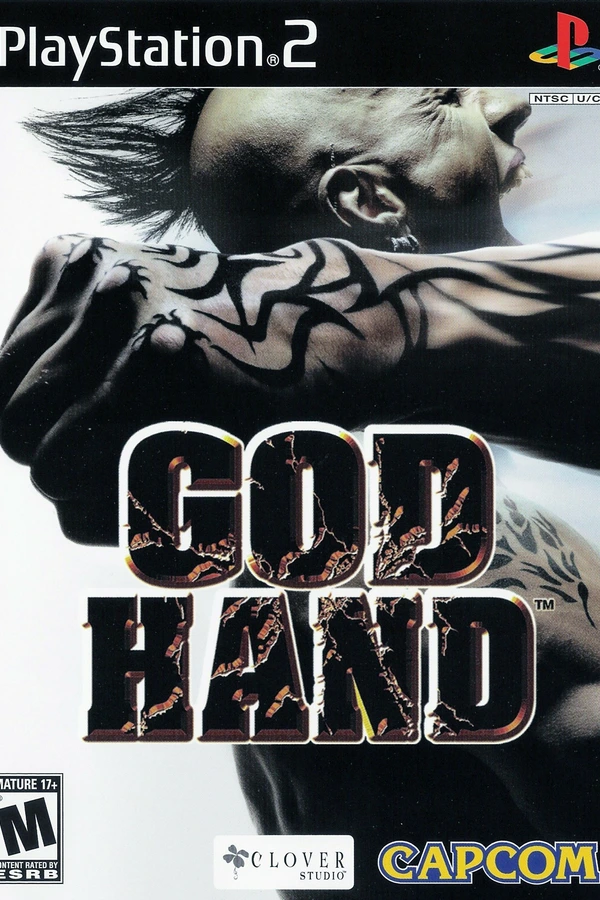
3 versiones de God Hand
Estás viendo: God Hand Decompilation
Información oficial del proyecto
god-hand-decomp


Matching decompilation of God Hand (PS2, 2006, Clover Studio / Capcom). The
goal is to rewrite the game's machine code as C/C++ that, compiled with the
original toolchain, reproduces the NTSC-U retail master (SLUS-21503)
byte-for-byte from a single source tree.
| key | serial | region | disc | boot ELF | status |
|---|---|---|---|---|---|
us | SLUS-21503 | NTSC-U | 1.00 | SLUS_215.03 | matching (primary) |
The build is byte-identical to the retail boot ELF (elf_sha256 in
config/versions.json) and carries the active C
decompilation. An empty carve already reproduces retail; as functions are
decompiled it stays byte-identical, so 100% matched code means a byte-identical
ELF.
Goal
Produce C/C++ that compiles back into a byte-identical SLUS_215.03 plus
matching .rel overlays, using the original PS2 toolchain (ee-gcc 2.96 + the
SN linker + dvp-as). The sole aim of this project is to decompile the game;
there is no port.
How it works
This is a matching decompilation: the bar is reproducing the exact bytes the original compiler emitted, not writing equivalent code.
- splat disassembles the retail boot ELF into one monolithic assembly file
(
asm/cod/000000.s), with the retail bytes embedded in each instruction comment. - Every function starts as raw assembly
#included from C viaINCLUDE_ASM(...). Functions are rewritten to C one at a time — carving — and theINCLUDE_ASMline is replaced by real C once it matches. - objdiff scores each compiled unit against the retail disassembly. A
function is matched when its compiled
.textis identical down to register allocation and instruction order. - One ratchet drives everything: every commit keeps the full ELF byte-identical
to retail, and
matched_code_percentonly ever goes up.
┌─────────────────────────────────────────────────────────────────┐
│  splat + ee-gcc 2.96 + dvp-as + ee-ld + objdiff + asm-differ    │
│  ground truth: disc_extract/SLUS_215.03 (sha256 1742f95b…f3cd)  │
└─────────────────────────────────────────────────────────────────┘
Inspirations:
- decomp.me — the collaborative matching-scratch model
- recvx-decomp — a PS2 matching-decomp template from the same era and publisher
Layout
.
├── God Hand (USA).iso       your own dump, gitignored
├── disc_extract/            extracted boot ELF + tables, gitignored
├── config/
│   ├── SLUS_215.03.yaml      splat config
│   ├── SLUS_215.03.lcf       ee-ld linker script
│   ├── symbol_addrs.txt      name → address map (seeded from Ghidra)
│   ├── reloc_addrs.txt
│   └── versions.json         per-version serials + retail hashes
├── src/                     decompiled C/C++
├── include/                 shared headers (sce/, cri/, capcom/, gh/)
├── asm/                     splat output, INCLUDE_ASM'd from src (gitignored)
├── bin/                     splat data dumps (gitignored)
├── expected/                disassembled-from-retail .o files (objdiff target, gitignored)
├── build/                   compile output (.o, .elf, .map), gitignored
├── tools/                   splat, m2c, asm-differ, objdiff, decomp-permuter (provisioned by setup)
├── scripts/                 build entry helpers + utilities
├── compile.py               top-level build entry point
└── objdiff.json             objdiff project (per-.o scoring)
Setup
You need your own legally-dumped NTSC-U disc. No game data ships in this repo and none should ever be committed.
# 1. Place your own dumped ISO at the repo root as 'God Hand (USA).iso',
#    then extract + verify the boot ELF and the .rel overlays:
./scripts/extract_iso.sh
python3 scripts/afs_extract.py

# 2. Provision the toolchain (ee-gcc 2.96 + SN linker + dvp-as, splat, m2c,
#    objdiff, asm-differ, decomp-permuter), the venv, and the git hooks:
./scripts/setup_toolchain.sh

# 3. One-time host dependency (the cross assembler the build calls):
#    install your distro's mipsel-linux-gnu binutils.

# 4. Split the boot ELF and the r207 overlay into asm, dump the ELF metadata the
#    link replays, and write the objdiff scoring project. Splat reads the loaded
#    image (.rom), not the ELF:
mkdir -p build
mipsel-linux-gnu-objcopy -O binary disc_extract/SLUS_215.03 build/SLUS_215.03.rom
./scripts/resplat.sh
.venv/bin/python -m splat split config/r207.yaml
.venv/bin/python scripts/extract_elf_metadata.py
.venv/bin/python compile.py --setup

# 5. Build (an empty matching link to start — every byte comes from re-assembled asm):
.venv/bin/python compile.py          # default version is 'us'

# 6. Sanity-check the tooling:
.venv/bin/python -m pytest tests/    # parsers, carve splitter, mappers — wall < 1 s
After step 5 you should have a build/SLUS_215.03.elf whose sha256 equals the
retail boot ELF. If that holds, your environment is correct.
Nix dev environment
nix develop provisions a sealed toolchain (compiler, wibo, objdiff,
cross-binutils, python, node). It is additive to scripts/setup_toolchain.sh:
the shellHook symlinks the pinned blobs into the exact gitignored paths the
script already guards, so the script skips the blob fetches and only sets up the
venv, the Python tools, the assembler patches, and the git hooks.
-
Linux (x86_64 or ARM):
nix develop, then./scripts/setup_toolchain.sh(the blobs are already provisioned), then Setup steps 4 and 5. On x86_64 the i386 compiler blobs run natively; on ARM they run transparently underqemu-i386(wired into the shell). -
Without Nix: install the host prerequisites and run
./scripts/setup_toolchain.shas before, then Setup steps 4 and 5. -
macOS: the compiler is an i386-Linux binary, so run the Linux flow inside a
linux/amd64container:docker run --platform linux/amd64 -v "$PWD":/src -w /src nixos/nix \ nix develop --extra-experimental-features 'nix-command flakes' --command bash -
Windows: use WSL2, not WSL1 (WSL1 cannot run the 32-bit compiler). Clone inside the WSL filesystem (e.g.
~/), not under/mnt/c, then follow the Linux flow.
Measuring progress
Progress is measured two complementary ways:
-
matched_code_percent/matched_functions— the fine-grained metric. objdiff diffs every compiled unit against the frozen retail-disassembly target and counts the.textbytes (in real C units) that compile byte-identical to retail:python compile.py --setup # build units + write objdiff.json scripts/progress.sh # -> progress/report.json + headline -
Full-ELF byte identity — the binary pass/fail gate. The build checks the built ELF's sha256 against the retail boot ELF: it stays green only while every carved function reproduces retail exactly, so 100% matched code ⇒ a byte-identical ELF.
The two are complementary: objdiff shows how far in the decomp is; the sha256 gate shows whether the binary still reproduces.
Live progress is also tracked at decomp.dev/LucasPicoli/god-hand-decomp.
Contributing
Contributions are welcome. See CONTRIBUTING.md for how the
matching loop works, how to set up locally, and how to take a function from raw
asm to a byte-identical match. Good first targets are small leaf functions; open
an issue if you'd like to coordinate on something larger or have a question.
Legal
This repository contains no copyrighted Capcom or Sony assets. The boot ELF hash
recorded in config/versions.json identifies the
legitimately-dumped NTSC-U retail disc, but no game data is distributed here. The
original PS2 SDK binaries used for matching builds are not redistributed; the
setup script downloads them from public archives maintained by the PS2 decomp
community.
Trademarks of God Hand, Clover Studio, and Capcom belong to their respective holders. This project is for preservation, education, and non-commercial research.
License
The original code, tooling, and documentation in this repository are released under the MIT License. This covers only the project's own authored work: the reconstructed C, the build scripts, and the configuration.
It grants no rights to God Hand itself. The game, its code, and its assets remain the property of Capcom. This is an independent, unofficial reverse-engineering project, and it is not affiliated with, authorized by, or endorsed by Capcom or Clover Studio. See Legal for what is and is not distributed here.
By contributing, you agree that your contributions are licensed under the same MIT License.