
Spyro the Dragon · spyro (SomeoneIsWorking)
Spyro the Dragon
OriginPlayStation
TechnologyStatic recompilation (native C/C++)
Available forWindows
View official projectAbout the project
Proyecto de recompilación comunitaria de Spyro the Dragon, indexado por Recomp.fyi. Proyecto activo/WIP; Recomp.fyi todavía no declara una plataforma de ejecución.
4 versions of Spyro the Dragon
You're viewing: spyro (SomeoneIsWorking)
Official project information
SpyroEngine — Spyro 1, 2, and 3
A work-in-progress native PC port of the original PlayStation Spyro trilogy. The target architecture combines title-owned native subsystems with psxport's runtime Lightrec executor for every remaining MIPS instruction read from the player's authenticated game files.
Screenshots
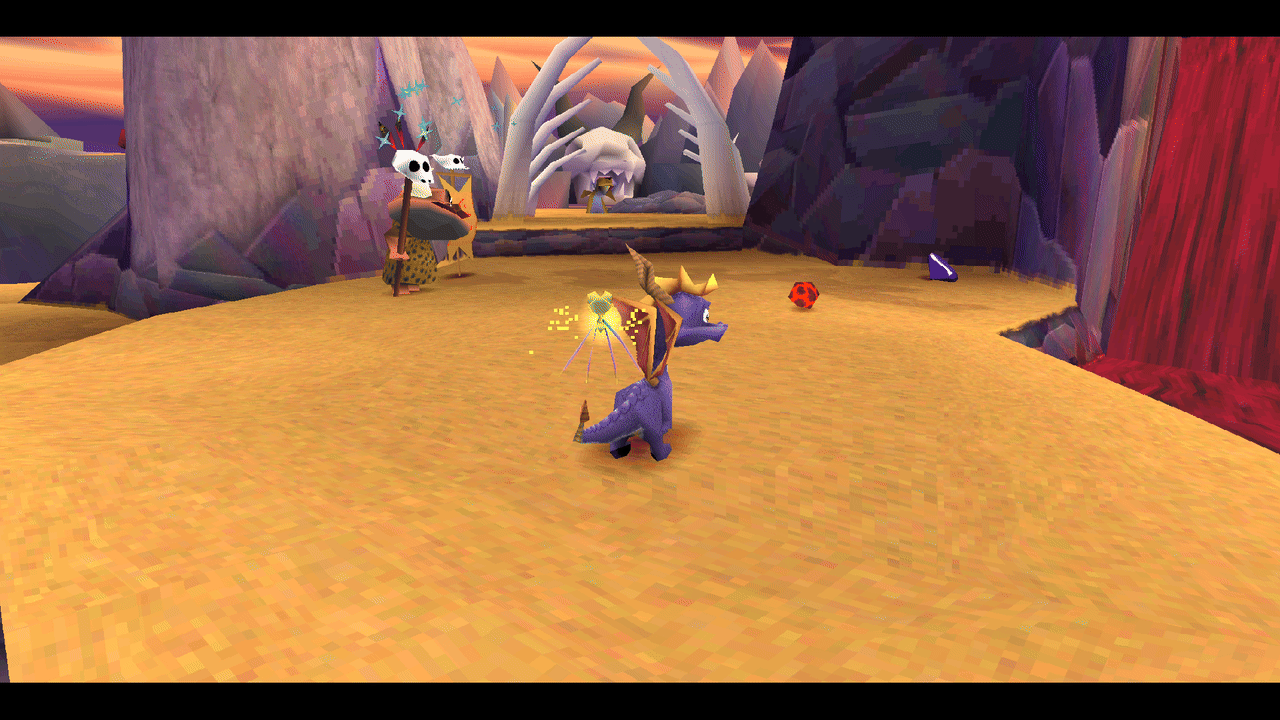
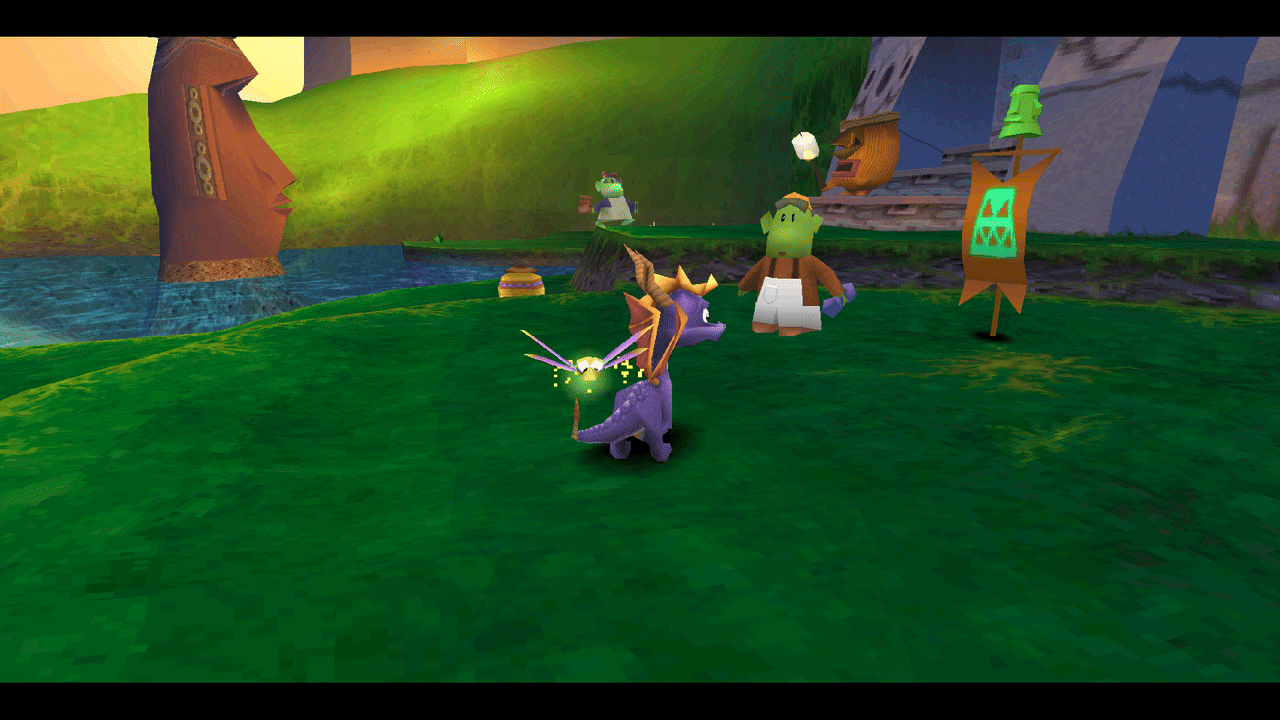
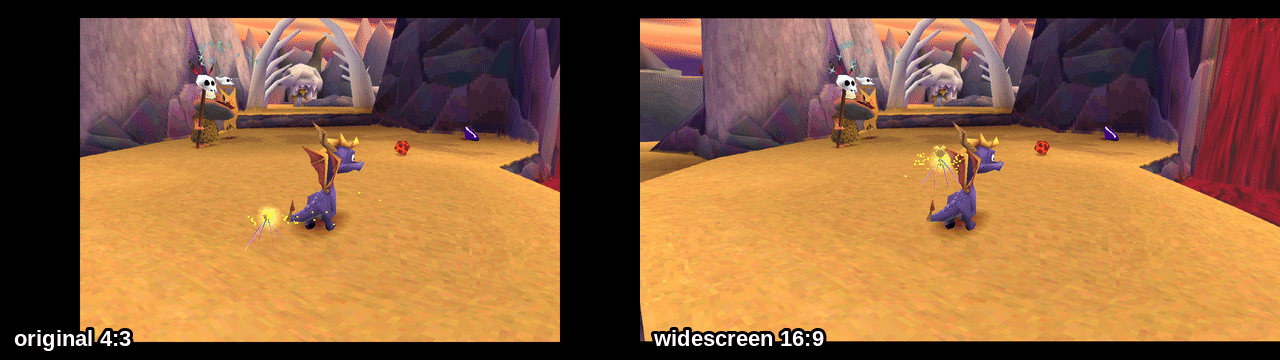
Captured from the port at 16:9 with 60 fps interpolation on.
Spyro the Dragon
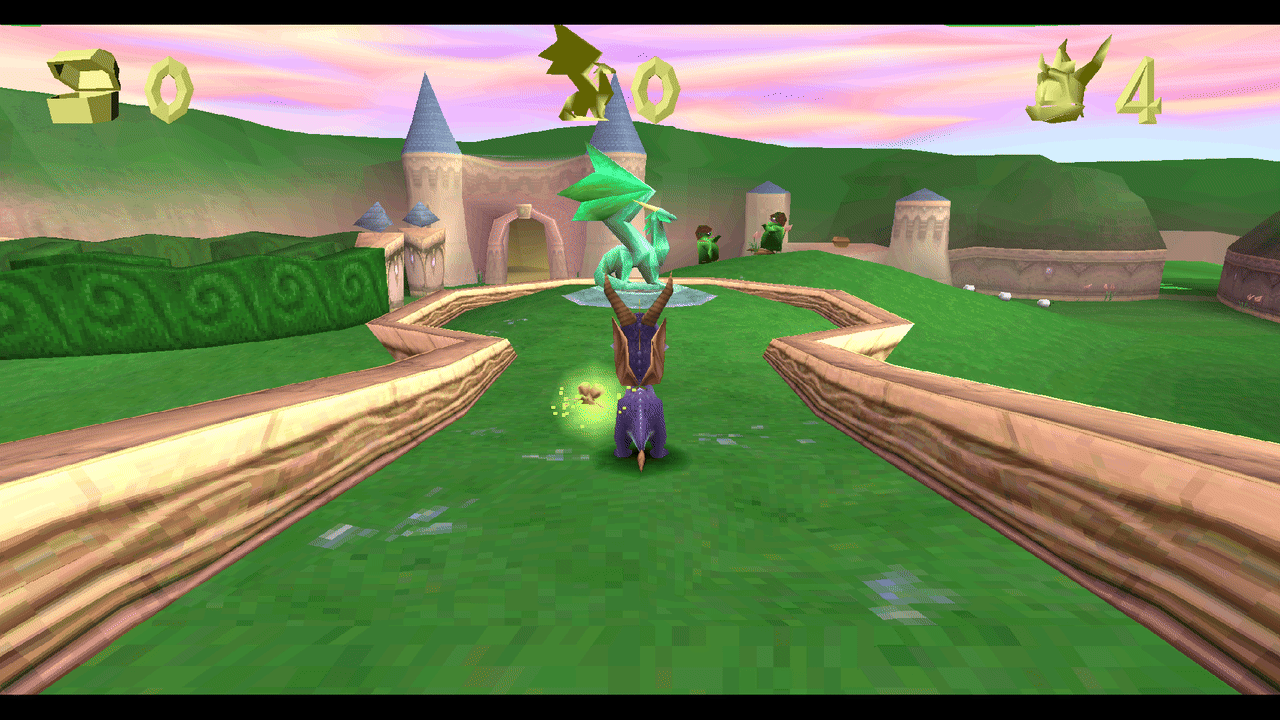
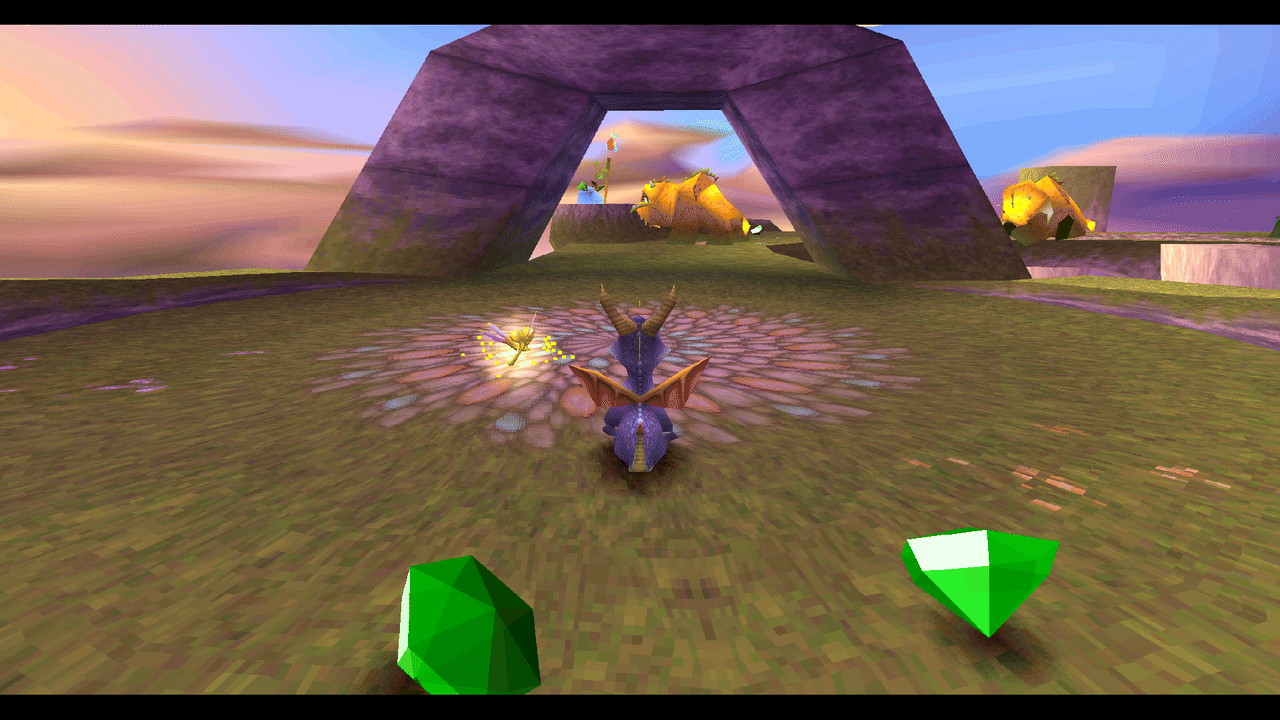
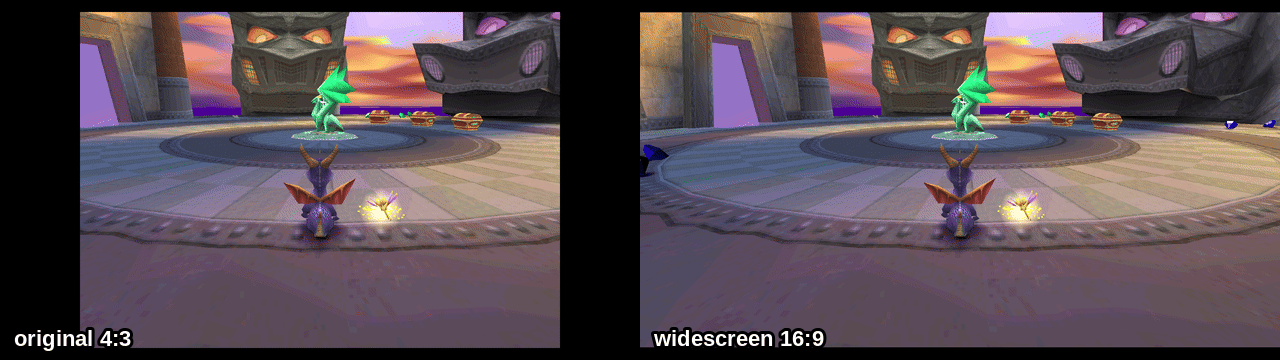
The title-screen flyby: the original 30 fps on the left, interpolated 60 fps on the right.
Spyro 2
Spyro: Year of the Dragon
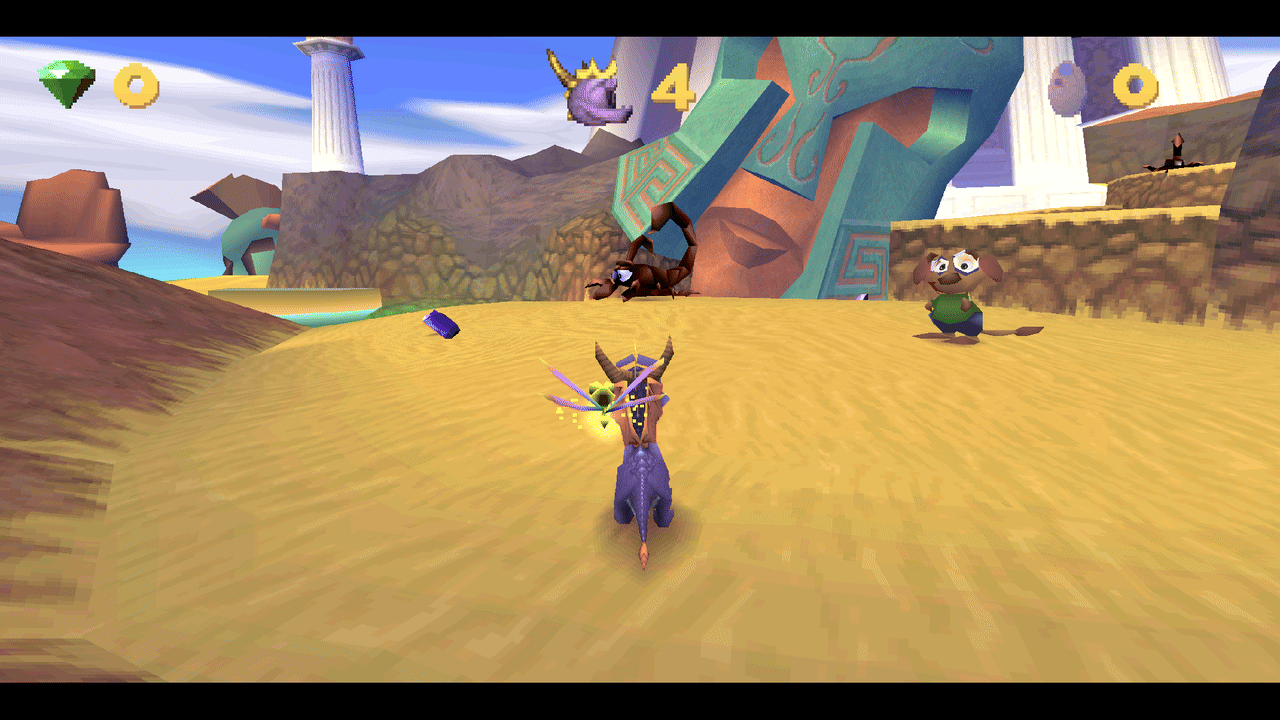
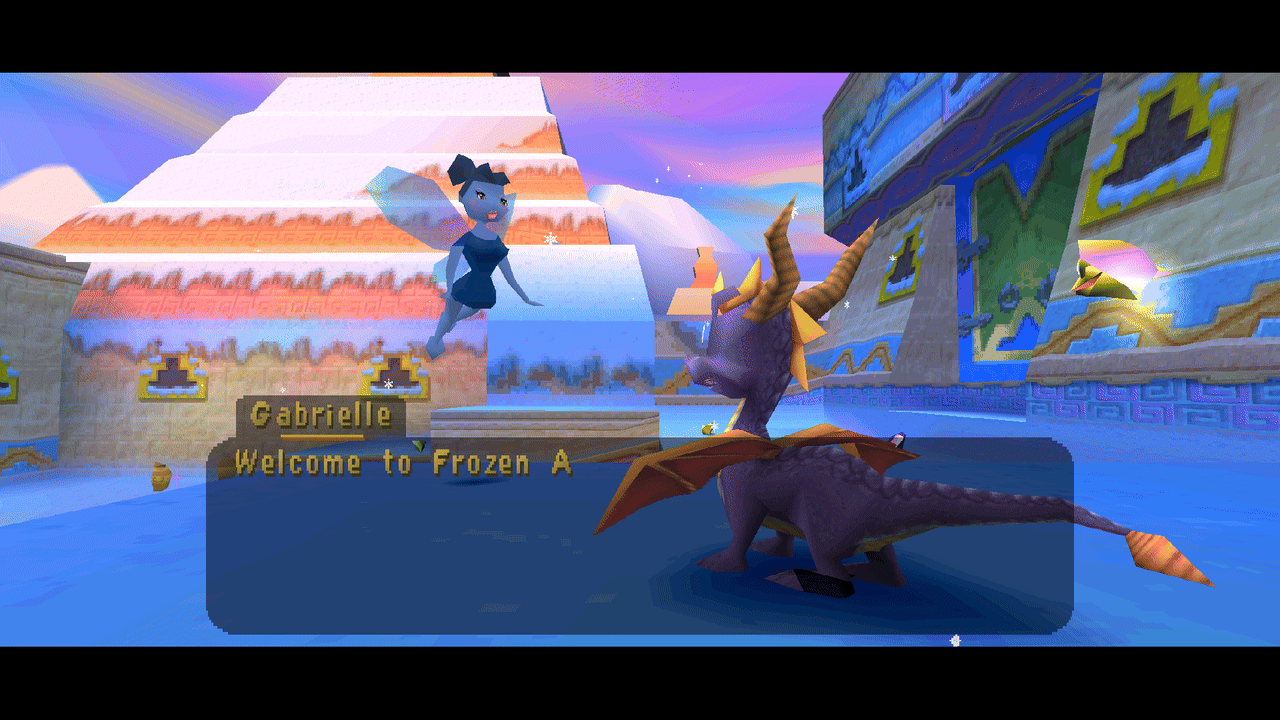
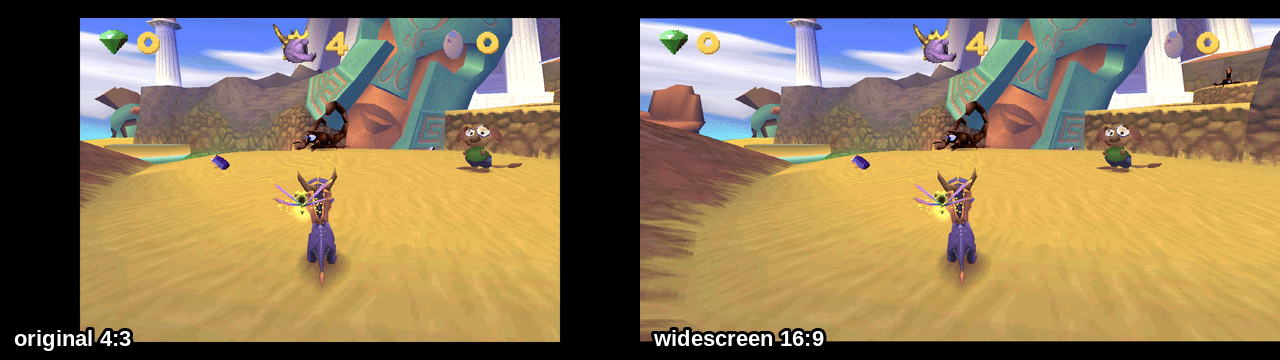
The Insomniac intro: the original 30 fps on the left, interpolated 60 fps on the right.
No game code, asset, executable, disc image, or BIOS is distributed. Supply a legally obtained copy.
Title status
| Title | Executable identity | Current evidence |
|---|---|---|
| Spyro the Dragon | SCUS_942.28 | Reaches the title/save flow, opening cutscene and Artisans gameplay through Lightrec. Presents on the Record path; 60 fps composes only the screen tint and letterbox, and widescreen keeps retail's culls and HUD (issue 0186). |
| Spyro 2 | SCUS_944.25 | Reaches Glimmer gameplay from its own title screen. Record path with widened culls, an anchored HUD and interpolated terrain; mobys, HUD, sky and particles have no producer (issue 0176). |
| Spyro 3 | SCUS_944.67 | Reaches Sunrise Spring gameplay from its own title screen. Record path as Spyro 2, on the same terrain producer. |
Status and evidence are in docs/project-state.md; feature chains in docs/features.md.
The executable serial, PS-X EXE header, size, and hash jointly select a title. A title never borrows another title's addresses, runtime images, or capability policy.
Migration status
The former product emitted guest code as C and compiled it into title-specific executables. That
architecture is removed. The generator, corpora, seeds, generated dispatcher/tests, old build path,
and emitted world body are absent. The sole product accepts the authenticated executable and enters
psxport's runtime guest-execution boundary. The remaining work is in
docs/migration.md.
Spyro 1's initial runtime discriminators are the recorded stage-13 routes:
- the 800-field boot/title route; and
- the 900-field forced-input mode-2 save-picker route.
Both run through the linked Lightrec executor with a title-owned frame/field boundary, nonzero translated blocks, one presentation fence per host step, and fatal guest VSync. The emitted world-body include has been replaced by an explicit scoped-original boundary for the unchanged retail guest body. The current Artisans observation also crosses this runtime boundary.
These 800/900 routes prove wiring only. A later representative interactive gameplay milestone must prove native and scoped-original calls, positive and negative invalidation across address-reusing WAD images, independent-oracle state, bounded fallback admission, no interpreter-only product selector, and correctness/frame-time budgets on each released host architecture.
Intended player experience
./run.sh enters the frozen uv environment, authenticates the selected disc, provisions only the
PS-X EXE, builds the native/Lightrec product without offline guest translation, and launches it.
psxport is the live sibling checkout (psxport's tools/psxport_fetch.py, run from psxport main), with Lightrec pinned by revision. The
real-media execution evidence and remaining gaps are recorded in
docs/project-state.md. Lightrec remains the
sole product executor, with only the shared framework's bounded fallback after a classified JIT refusal.
The build requires CMake and Ninja alongside the documented native dependencies. The launcher selects Ninja explicitly and migrates older generator state within its owned build directory while preserving nested player and dependency builds. CMake owns compiler selection; GCC, Clang and other supported platform compilers remain accepted.
Player builds will accept the supported GCC, Clang, and AppleClang toolchains. Maintainer C++
verification uses Clang with the tracked clang-format and clang-tidy policy. Missing native
dependencies must be refused with an exact user-run package command; Ghidra and other RE tools are
never player prerequisites.
Hosted CI is deliberately asset-free: one Linux Clang job builds spyro_port without downloading
game files or claiming runtime gameplay. macOS arm64, Windows x86_64 and Android arm64 runtime jobs
remain missing until platform packaging lands. Maintainers build with CC=clang CXX=clang++ uv run --frozen python external/psxport/tools/port/consumer_build.py --build build/agent --target spyro_port; title gameplay and
real-media evidence remain separate requirements.
Architecture
authenticated executable / resident WAD image
                    |
                    v
        per-Core psxport Lightrec executor
          | dynamic cache | invalidation |
          +---------------+--------------+
                          |
            image-aware title dispatch
               |                    |
         native override      original guest body
                               through Lightrec
game/ owns what the three titles share: the runtime base, field delivery, the boot-prefix driver,
CD/archive, widescreen, and the shared terrain drawer and its producer. titles/<title>/ owns
executable identity and title-local lifecycle and overrides. external/psxport/ owns the
title-neutral executor and PSX services. docs/codemap.md maps each module to the concepts it owns.
See docs/project-goals.md for durable outcomes,
docs/project-state.md for factual coverage,
docs/codemap.md for ownership, docs/features.md for
feature chains, and
docs/re-frontier.md for the ordered binary-evidence chain.
Legal
psxport's vendored beetle-psx backend is GPL-2.0. Spyro is a trademark of its respective rights holders. This project is not affiliated with or endorsed by them.