God of War: Chains of Olympus (PSP Web Recomp)
God of War: Chains of Olympus
About the project
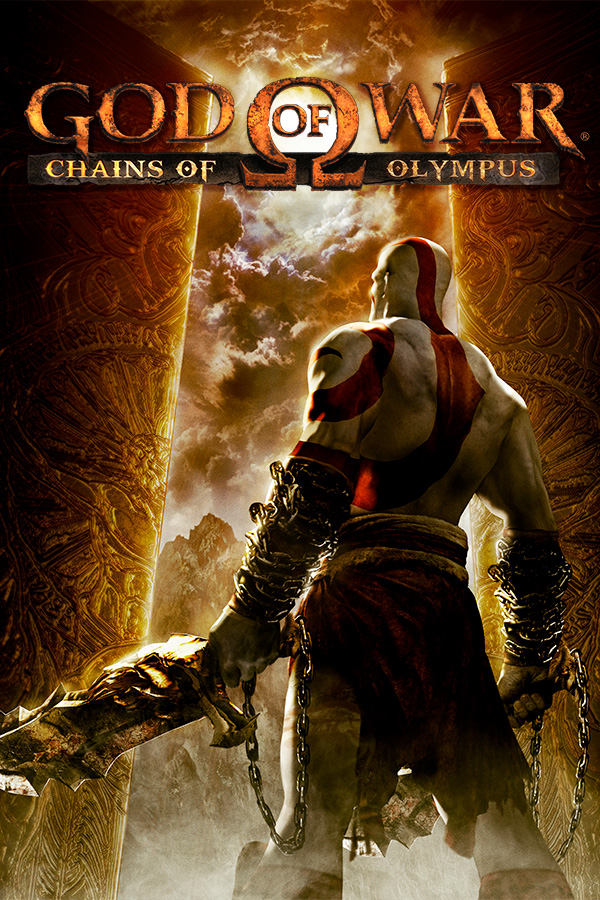
God of War: Chains of Olympus es un videojuego de acción y aventura de hack and slash desarrollado por Ready at Dawn y publicado por Sony Computer Entertainment (SCE). El juego se lanzó por primera vez para la videoconsola portátil PlayStation Portable (PSP) el 4 de marzo de 2008. Es la segunda entrada derivada de la serie God of War, el cuarto juego en general, y tiene lugar entre el título de 2013 God of War: Ascension y el God of War original. Se basa libremente en la mitología griega y está ambientada en la antigua Grecia, con la venganza como motivo central.
3 versions of God of War: Chains of Olympus
You're viewing: God of War: Chains of Olympus (PSP Web Recomp)
Official project information
PSP Web Recomp
PSP games running in the browser. The game's MIPS machine code is translated ahead of time into C++, compiled to WebAssembly, and linked against a small reimplementation of the PSP's operating system and graphics chip that draws with WebGL2.
<p align="center"> <img src="docs/media/demo.webp" alt="God of War: Chains of Olympus running in a browser" width="720"> <br> <a href="docs/media/demo.mp4">Watch the full recording (1:46)</a> </p>The first title brought up this way is God of War: Chains of Olympus. It plays from boot through the menus, cutscenes and combat, at 60 frames per second in the scenes measured so far in Chrome and Firefox on a laptop, at up to four times the PSP's resolution, and on phones with on-screen touch controls. Music, speech and sound effects work. Movies are skipped for now.
God of War: Ghost of Sparta followed through the same scripts. It needed the PSP's DRM decryption for one small file, a handful of system calls and a lighting fix, and no performance work: it runs at 55 to 60 frames per second at three times the native resolution.
No game data is included here. You bring a disc image of a game you own, and the scripts in this repository turn it into a web page on your machine.
How it works
Recompilation. PSPRecomp analyses the decrypted executable, finds its functions and emits C++ for them in translation units of 16 KiB of guest code each. That code runs against a register file and a model of the PSP's memory. This project adds a handful of fixes to PSPRecomp (in patches/) and a new target for it, the web profile in profile/.
A small PSP kernel. Whatever the game asks of the PSP's operating system is answered by high-level emulation in profile/host: cooperative threads with semaphores, event flags and callbacks, memory partitions, the file system (with disc data streamed over HTTP Range requests, so only the executable is downloaded up front), the controller, audio output, saving and loading game progress, message dialogs, and the movie player's bookkeeping. Guest time advances in frames, so a game sees a steady 60 Hz however fast the host runs.
Graphics. The GE, the PSP's graphics chip, is fed display lists. ge.cpp decodes them on the CPU, including vertex formats, skinning, lighting, texture generation, clipping and backface culling, and hands batched triangles and render state to ge_gl.cpp. There, framebuffers become WebGL render targets keyed by their place in VRAM, so effects that render to a texture and read it back stay on the GPU. Pixel format reinterpretation (games read 32-bit buffers as 16-bit textures and back), the PSP's stencil-in-alpha, fog and block transfers are emulated on the GPU as well, and everything can render at one to four times the native 480×272.
Two threads, like the PSP. On the PSP the graphics chip works through one frame's display list while the CPU prepares the next, and games are written around that. Here the GE and its WebGL context run on a worker thread with an OffscreenCanvas: queuing a list returns at once and only the explicit sync calls wait. A frame costs whichever thread is busier rather than the sum of both.
Port a game of your own
You need git, CMake, Ninja, a C++20 compiler and Python 3. Everything has been run on Linux; macOS should be able to build the browser version but is untested, and the native test runner needs EGL and OpenGL ES headers (libegl-dev and libgles-dev on Debian and Ubuntu). Expect about 2 GB of disk space per game for the extracted disc, the generated code and the builds.
git clone https://github.com/snuri00/psp-web-recomp.git
cd psp-web-recomp
scripts/setup.sh                                   # PSPRecomp, the patches and the Emscripten SDK

PSP_DECRYPT=/path/to/decrypter scripts/port.sh mygame "My Game.iso"
scripts/serve.sh mygame                            # http://localhost:8613/
port.sh extracts the disc (an ISO, a ZIP containing one, or an already extracted folder), decrypts PSP_GAME/SYSDIR/EBOOT.BIN, translates it to C++, writes the manifest for streaming the rest of the disc and builds the page. It takes a few minutes; God of War goes from ZIP to playable page in about four on an 8-core laptop. Add --native to also build a headless runner that can dump frames to images and record audio, which is the quickest way to see how far a new game gets.
Executables on retail discs are encrypted. PSP_DECRYPT names any tool that is called as tool <in> <out> and writes a plain ELF, such as DecEboot or pspdecrypt. PPSSPP can also dump a decrypted executable while it runs a game (Settings, Tools, Developer tools).
Set your expectations accordingly: two games have been brought up so far, and both are Ready at Dawn titles built on the same engine, so they say little about how far a game from another studio gets. Another game will most likely stop at a system call nobody implemented yet, which is logged as [hle] unimplemented ..., or use a GE feature this renderer does not handle. docs/internals.md describes the tools for finding out what is missing, and the code is organized so that adding a call is a few lines.
Saves
Games save the way they do on a PSP, into PSP/SAVEDATA on the memory stick, and the page keeps that folder in the browser's storage for the address you play from, so progress survives a reload. When a game asks you to pick a save slot, the page shows the slots with their icons and descriptions; arrow keys, a gamepad or a tap choose one.
Browser storage can be cleared along with a site's data, and it does not travel between browsers or devices. Export saves downloads everything as a ZIP file laid out like the PSP's SAVEDATA folder, and Import saves adds the saves from such a file. Saves copied from a real PSP or from PPSSPP are usually encrypted and will not load yet.
Hosting
The page uses SharedArrayBuffer for its threads, so it has to be served cross-origin isolated, with Cross-Origin-Opener-Policy: same-origin and Cross-Origin-Embedder-Policy: require-corp. scripts/serve.py sends both headers and supports the Range requests the disc streaming relies on. To try it on a phone, put a tunnel in front of it, for example cloudflared tunnel --url http://127.0.0.1:8613, which passes the headers through. Anyone with the address can load the game while the tunnel runs, so keep it to yourself and stop it when you are done.
Browsers that cannot draw WebGL2 on an OffscreenCanvas fall back to a single thread automatically; ?threads=0 forces that, and ?profile adds a per-frame timing breakdown to the status bar.
Legal
This repository contains only original code, the PSPRecomp patches and third-party code under its own license. It contains no game code or data. The generated C++ and the built WebAssembly are translations of the game's executable, so they belong to the game's owners: keep them on your own machine and do not publish them. Use disc images of games you own. God of War is a trademark of Sony Interactive Entertainment; this project is not affiliated with or endorsed by Sony or any game publisher.
Credits
PSPRecomp by its contributors (MIT) does the static recompilation. PPSSPP and JPCSP documented much of the hardware behavior emulated here, and PPSSPP's standalone copy of FFmpeg's ATRAC3/ATRAC3+ decoder is used for music and speech (LGPL 2.1 or later, in profile/third_party/at3_standalone). Emscripten builds the WebAssembly.
License
The code in this repository is available under the MIT License, see LICENSE. profile/third_party/at3_standalone keeps its LGPL 2.1 license.